Cultural Context
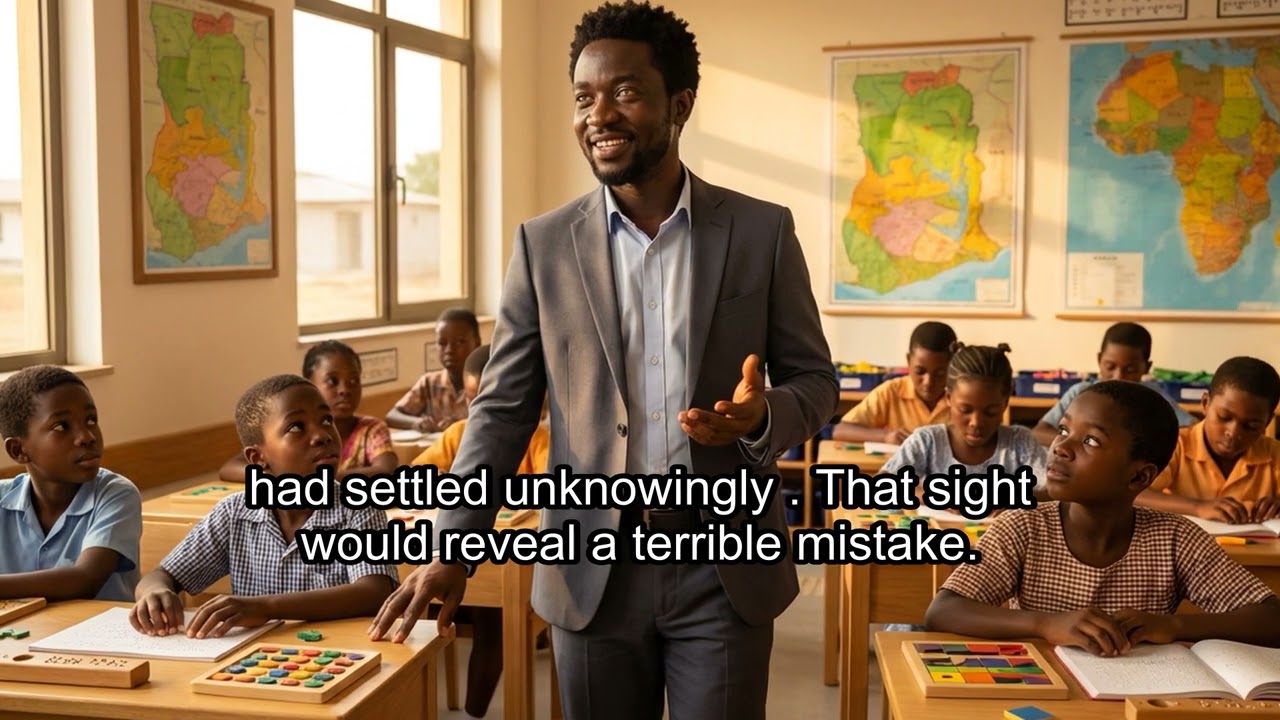
Among the Yoruba, storytelling has never been separated from teaching how to live well with one another. A tale is expected to carry ìwà — good character — and to model the kind of attentiveness elders hope children and adults alike will practice. "Why the Mute Boy Drew the Same Picture Every Day" belongs firmly to that tradition, even though its setting is a modern Lagos private school rather than a village compound under a baobab tree. The child at its center, Chidi, does not speak, but the story insists that silence is not the same as having nothing to say.
This is a meaningful shift in a culture where oral tradition itself is built on the spoken word — proverbs, praise poetry, and call-and-response storytelling. A tale that centers a nonverbal child asks its listeners to expand what counts as language. Chidi's colored pencils, his precise order of blue, black, red, gray, become his own oral tradition in miniature: a fixed, repeated telling that others must learn to "listen to" with their eyes rather than their ears.
The story also reflects real tensions in many Nigerian households, where disability can be read through a spiritual lens — a trial from God, a test of faith — or through a lens of shame, something to be managed quietly rather than understood. Both responses appear in the fable, voiced by Chidi's mother and father respectively, and both are gently challenged by the arrival of a teacher willing to kneel down and simply watch.
Historical Background
Understanding of autism and nonverbal communication is still developing unevenly across Nigeria. For decades, children who did not speak, or who engaged in repetitive behaviors, were often assumed to be intellectually delayed, spiritually afflicted, or simply "difficult," with few schools equipped to distinguish between these very different realities. Formal autism diagnosis and support services have historically concentrated in a handful of urban centers — Lagos, Abuja, Port Harcourt — leaving families elsewhere with little language, medical or cultural, for what they were witnessing in their children.
In the last fifteen to twenty years, Nigerian parent advocacy groups, occupational therapists, and a small but growing number of specialized schools have begun pushing back against the older instinct to hide or "manage" affected children quietly. Lagos in particular has seen the founding of autism resource centers and inclusive classrooms, alongside public awareness campaigns timed around World Autism Awareness Day each April. Progress remains uneven — Mrs. Adabio's advice to "just let him do it quietly" in the fable is not exaggerated fiction but a recognizable attitude still common in many staff rooms.
Art and occupational therapy have emerged as some of the most effective tools in this shifting landscape, precisely because they don't require verbal fluency to reveal a child's inner world. Nigerian art educators trained abroad, like the fable's Adaeze Wuku, are increasingly returning home and bringing therapeutic, observation-based approaches into ordinary classrooms rather than only specialist clinics.
The Story Behind It
The fable's power lies in its patience. For eleven months, Chidi produces the same drawing — 312 versions of a weeping woman behind bars — and for eleven months, the adults around him record the fact of his repetition without ever asking what it means. His art teacher's official note, "disturbing fixation, recommend psychiatric evaluation," is treated as a closed file rather than an open question. This is the story's central indictment: institutions can document a child endlessly and still fail to truly see him.
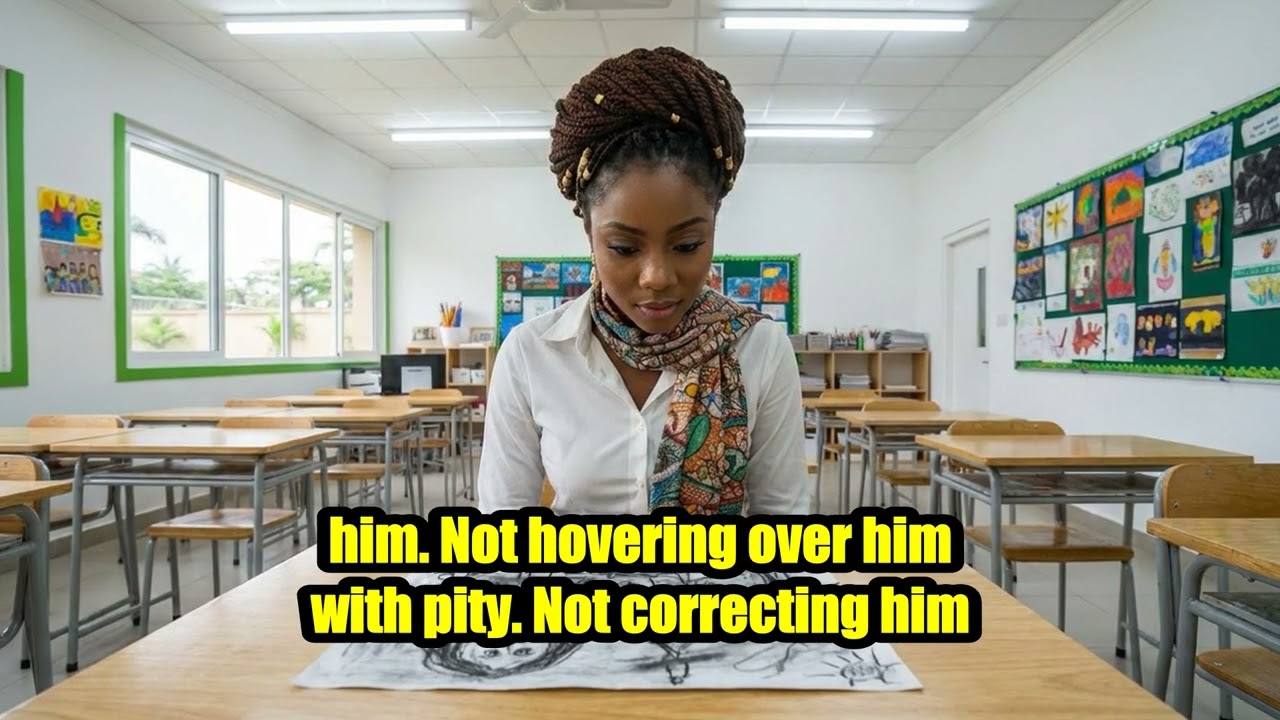
Adaeze changes this not through a dramatic intervention but through presence. She kneels beside Chidi's desk instead of standing over him, says "that's beautiful," and asks, "Who is she?" She does not expect an answer in words. Instead, she starts collecting, dating, and photographing his drawings with the same rigor a journalist — which her late mother had been — would bring to evidence. Her method models something the story wants adult listeners to internalize: repeated behavior in a nonverbal child is rarely meaningless noise. It is often the most careful communication that child has.
The drawing itself, with its haunting bars and tears, ties Chidi's inner testimony to something happening just beyond his classroom window — a quiet suggestion that his fixation on that particular desk, and that particular view, was never random. Without revealing where the fable's plot ultimately leads, its structure teaches a broader lesson well known in Yoruba pedagogy: patience and close observation (ṣàkíyèsí) are themselves forms of respect owed to every child, especially the one who cannot ask for it aloud.