Cultural Context
The Kanuri peoples of the Lake Chad basin built one of the longest-lived states in African history — versions of Kanem-Bornu held power from roughly 800 to 1900 CE, spanning the seasonal rhythms of a lake that shrinks and swells, feeding reed economies, cavalry routes, and farmland in turn. This is not a backdrop of empty desert. It is a working landscape that shaped how Kanuri rulers organized armies, fed cities, and moved across flood plains and scrub.
Kanem-Bornu's rulers carried the title Mai, and by the sixteenth century the empire's center of gravity had shifted west to Bornu, anchored around the capital Ngazargamu. Islamic scholarship, court record-keeping, and long-distance trade were already woven into Kanuri political life well before Idris Alooma's reign — his achievements built on existing institutions rather than inventing them from nothing.
What makes this story unusual is the quality of its source material. The chronicler Ahmad ibn Fartuwa rode with Mai Idris Alooma on campaign and recorded his reign in the kind of detail more often associated with European court records. This was African authorship documenting African statecraft from the inside, not an outside observer's travel account.
Historical Background
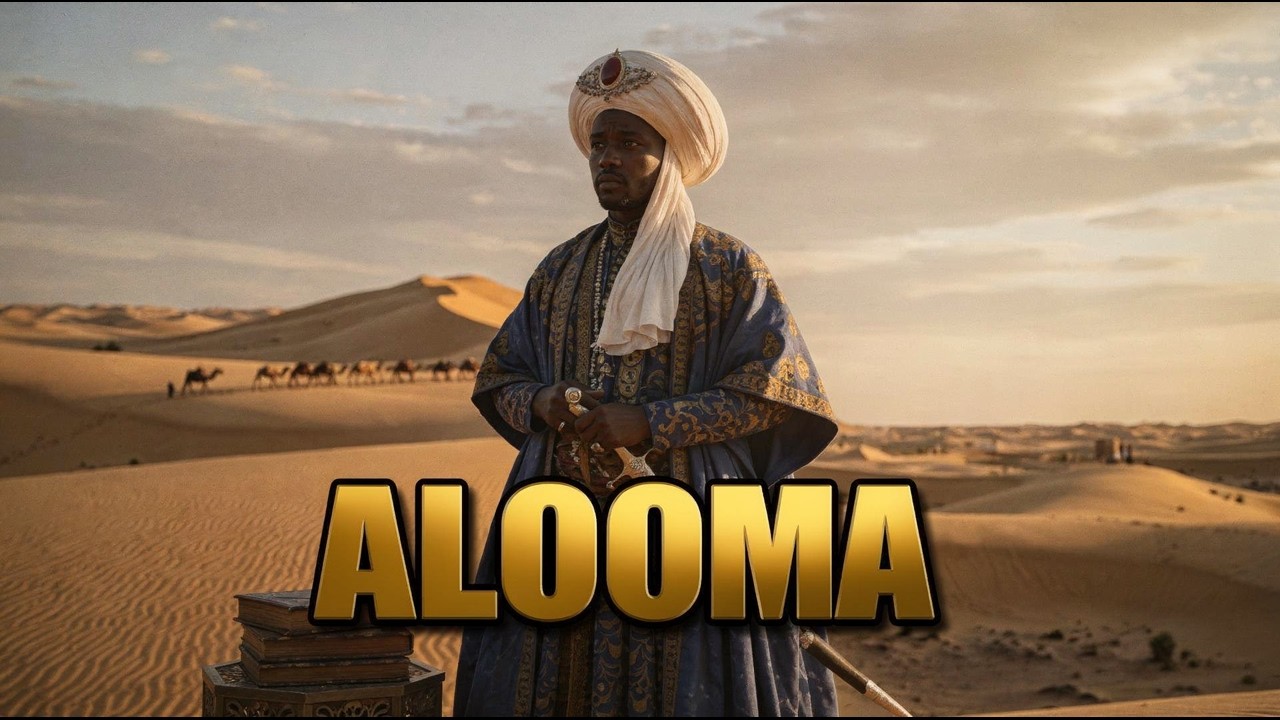
Idris Alooma ruled Kanem-Bornu from 1564 to 1603 — rare, confirmed dates for a precolonial Sahelian monarch. He inherited a kingdom contending with the usual pressures of succession politics and neighboring rivals, including the Bulala and various Tuareg and Hausa-speaking groups along Bornu's frontiers.
His defining decision was military modernization through diplomacy. Alooma established contact with the Ottoman sphere via North Africa, sending ambassadors to Tripoli and securing arquebuses and early muskets along with the craftsmen and military advisers needed to use them. For a region whose warfare had centered on cavalry and traditional weapons, firearms represented what might be called a new grammar of war — professional infantry units trained to use imported technology, integrated alongside Bornu's existing cavalry strength.
This was not simply importing gadgets. It required sustained diplomatic relationships, supply lines across the Sahara, and institutional capacity to absorb and maintain new military knowledge. Ibn Fartuwa's chronicle records something like a thousand military campaigns during the reign — a number meant to convey relentless scale rather than a precise tally, but the underlying pattern is well attested: a state capable of fielding and provisioning armies season after season across difficult terrain.
The Story Behind It
Military strength was only half of Alooma's project. He also performed the Hajj to Mecca, traveling as a sovereign rather than a subordinate within someone else's itinerary. While in Cairo, he established a hostel for Bornu pilgrims — a detail easy to pass over, but one that functioned as a deliberate statement. It announced that Bornu belonged within the same sacred and diplomatic networks as Cairo and Mecca, with its own lodging, its own standing, its own place in the traffic of Islamic political life.
At home, this religious and diplomatic investment matched domestic reform. Alooma built mosques, patronized Islamic schools, and strengthened Bornu's courts and legal institutions. Hard power — muskets, cavalry, campaigns — moved in tandem with soft power and legal reform within a single reign, rather than one following the other in separate eras.
Ngazargamu itself stood as one of the great cities of the central Sahel during this period, a mud-brick capital that demonstrated African urban scale did not depend on a European harbor or coastal trade route to flourish. Ibn Fartuwa's chronicle gives us a campaign diary written from inside the machine of state, by someone who rode with the Mai and treated the record as a form of weapon in its own right — refusing to let a Sahelian empire vanish into silence.