Cultural Context
Among the Baoulé people of central Côte d'Ivoire, the story of Queen Pokou is not a dusty legend kept in books — it is a living account of how the nation came to be, retold at gatherings, taught to children, and referenced whenever Baoulé identity itself is discussed. The Baoulé are part of the larger Akan-speaking world, sharing ancestry and cultural threads with the Ashanti of present-day Ghana, but their story of becoming a distinct people is anchored specifically in this one dramatic act of crossing.
In Akan oral tradition more broadly, leadership is often inseparable from spiritual responsibility. A queen mother or chief is not only a political figure but a steward of the community's survival, expected to make decisions that ordinary life rarely demands. Pokou's story sits squarely in that tradition — it is remembered as oral history precisely because it carries lessons about leadership, loss, and continuity that each generation needs to hear again, not because it is treated as finished, ancient business.
Historical Background
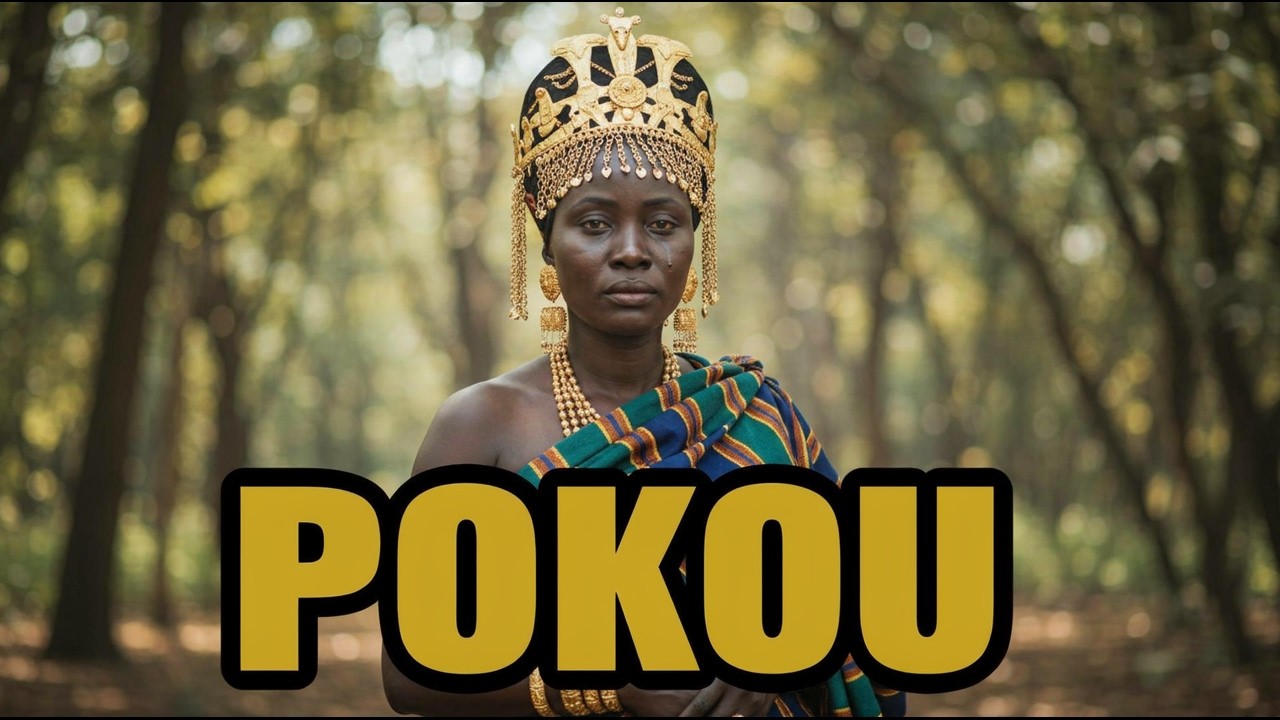
The story is rooted in a real historical rupture. In the early 18th century, following a succession dispute within the Ashanti Empire after the death of Asantehene Osei Tutu, a group of Akan people broke away and migrated westward rather than remain under the new order. Queen Pokou, said to be a niece of Osei Tutu, is remembered as the leader who guided this breakaway group away from conflict and toward what is now central Côte d'Ivoire.
Their journey was not simple travel — it meant crossing the Comoé River while being pursued, with the group's survival in question. The people who completed this crossing settled and became known as the Baoulé, a name oral tradition links directly to the sacrifice at the river. Historians treat the broad outline of this migration as plausible and consistent with documented Akan political upheavals of the period, even as the precise, dramatic details of the crossing belong to the realm of oral memory rather than written record. That blend — a real migration remembered through symbolic storytelling — is typical of how many West African peoples preserve their founding histories.
The Story Behind It
As it is told, Pokou's people reached the swollen Comoé River with enemies closing in behind them and no way across. A priest or spiritual counselor advised that the river demanded the most precious thing they possessed in exchange for passage. Pokou, understanding what was being asked, offered up her own son to the water.
In the versions passed down, the river then calmed, or a bridge of hippopotamuses (or in some tellings, vines or rocks) appeared, allowing the people to cross safely to the other side. Once across, Pokou is said to have cried out "Ba ouli" — "the child is dead" — a phrase oral tradition holds as the origin of the name Baoulé.
What makes this story endure is not simply the drama of the crossing but what it asks listeners to sit with: that founding a people sometimes demands an unbearable personal cost from the one who leads it. Pokou is remembered not as a conquering hero but as a mother who paid the highest price for her people's future, and that image of sacrificial leadership remains central to how the Baoulé understand their own history and the responsibilities of those who govern.