Cultural Context
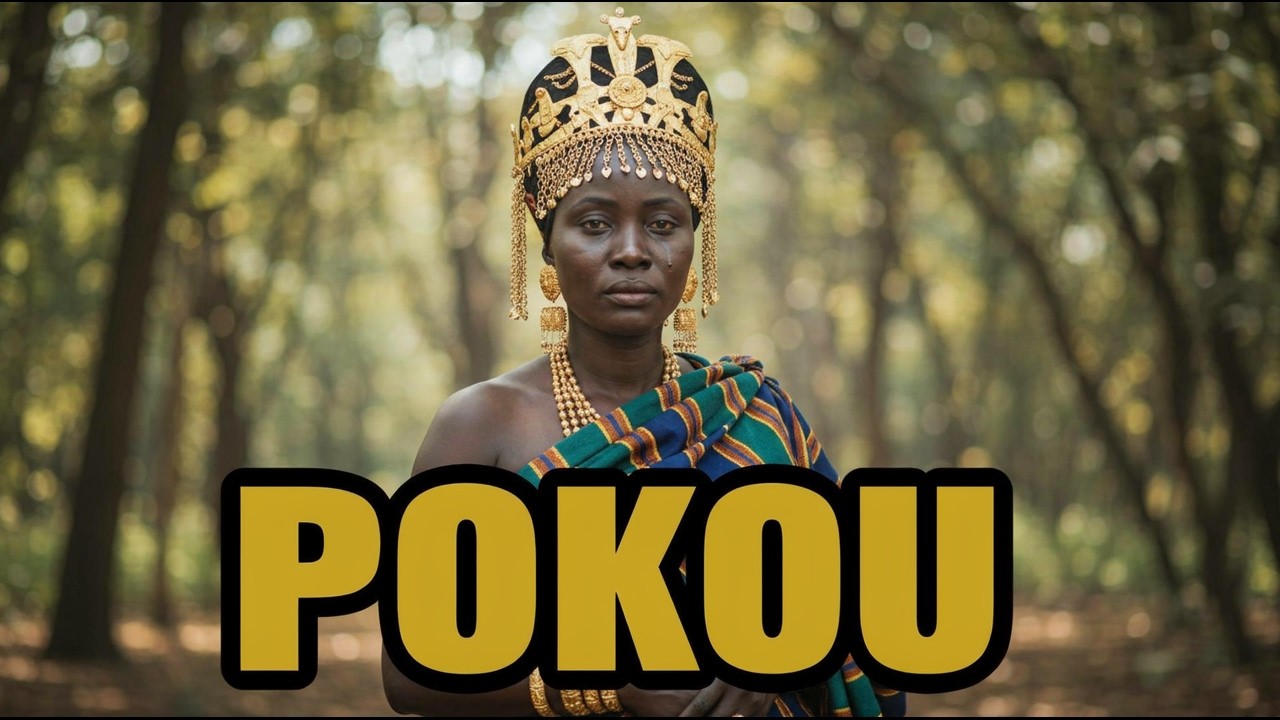
Among the Asante people of present-day Ghana, the Golden Stool — Sika Dwa Kofi — is not furniture. Oral tradition holds that it descended from the sky in a cloud of white dust, summoned by the priest Okomfo Anokye and placed gently on the knees of the first Asantehene, Osei Tutu. It was never meant to be sat upon by any living person, king included. Instead, it is the vessel of the Asante nation's sunsum, its spirit — the thing that binds the many Asante states together as one people, Asante Kotoko, "we die but we do not rot."
To understand why Prempeh I refused British demands with such unbending consistency, you have to understand that for the Asante, sovereignty and the Golden Stool were the same question asked two ways. A king could be captured, exiled, even humiliated. The Stool could not be touched, could not be sat upon, could not be handed over — not by him, not by anyone. This is why, when the British eventually demanded the Stool itself in 1900, they weren't asking for a tax or a treaty. They were asking the Asante to hand over their soul, and the Asante said no with their lives.
Historical Background
By the time Agyeman Prempeh I became Asantehene in 1888, the Asante Empire was already a seasoned diplomatic and military power — one that had negotiated, fought, and traded with European powers on the Gold Coast for over a century. But the political climate of the late 1880s was different. The so-called Scramble for Africa was underway, and British officials on the coast were treating Asante independence as an administrative problem to be solved rather than a sovereignty to be respected.
Britain offered Prempeh a protectorate. He refused — not once, but repeatedly, through a documented paper trail of formal correspondence. These were not vague gestures of defiance; they were the diplomatic record of a sovereign ruler declining, in writing, again and again, to surrender his nation's independence.
In 1896, a British military expedition marched on Kumasi. Prempeh made the hard calculation to submit without a pitched battle, almost certainly sparing the capital a massacre. The British repaid this restraint by seizing him. Governor Maxwell's forces arrested Prempeh and a number of Asante chiefs, shipping them first to Sierra Leone and then onward to the Seychelles — a deliberate exile strategy designed to remove the king's presence from Kumasi and let Asante memory of him fade. He would not see Kumasi again for 28 years.
The Story Behind It
With Prempeh gone, the British made their decisive — and fatal — miscalculation. In 1900, the colonial governor demanded that the Golden Stool itself be surrendered, apparently believing it was simply a ceremonial seat he could claim or even sit on. It was the single greatest insult available to make.
The response was the War of the Golden Stool, led not by a king but by a queen mother: Yaa Asantewaa of Ejisu, who rallied Asante forces when the male chiefs hesitated. Prempeh's exile had left a vacancy, but not a surrender — it created the very absence that forced others to stand and fight in his place.
In the Seychelles, Prempeh lived out years of tropical exile under colonial surveillance. He was baptized there as Edward Agyeman Prempeh, a documented ceremony whose motives were layered — faith, diplomacy, and the practical realities of survival as a watched captive. It would be a disservice to read this simply as conversion; it is better understood as a man navigating captivity with the tools available to him, his interior life his own.
Back home, Asante petitions for his return accumulated for decades. Memory did not thin the way colonial exile was designed to make it. In 1924, after years of sustained pressure, Prempeh returned to Kumasi — first as a private citizen, without his royal office restored. Picture that homecoming: twenty-eight years gone, a city full of faces that had aged without him, a capital that still remembered its throne even while the paperwork pretended otherwise.
In 1926 he was formally restored as Asantehene, though under real colonial limits — a diminished sovereignty wrapped around an intact title. He died at home in Kumasi in 1931, having outlived the very moment that was designed to erase him.