Cultural Context
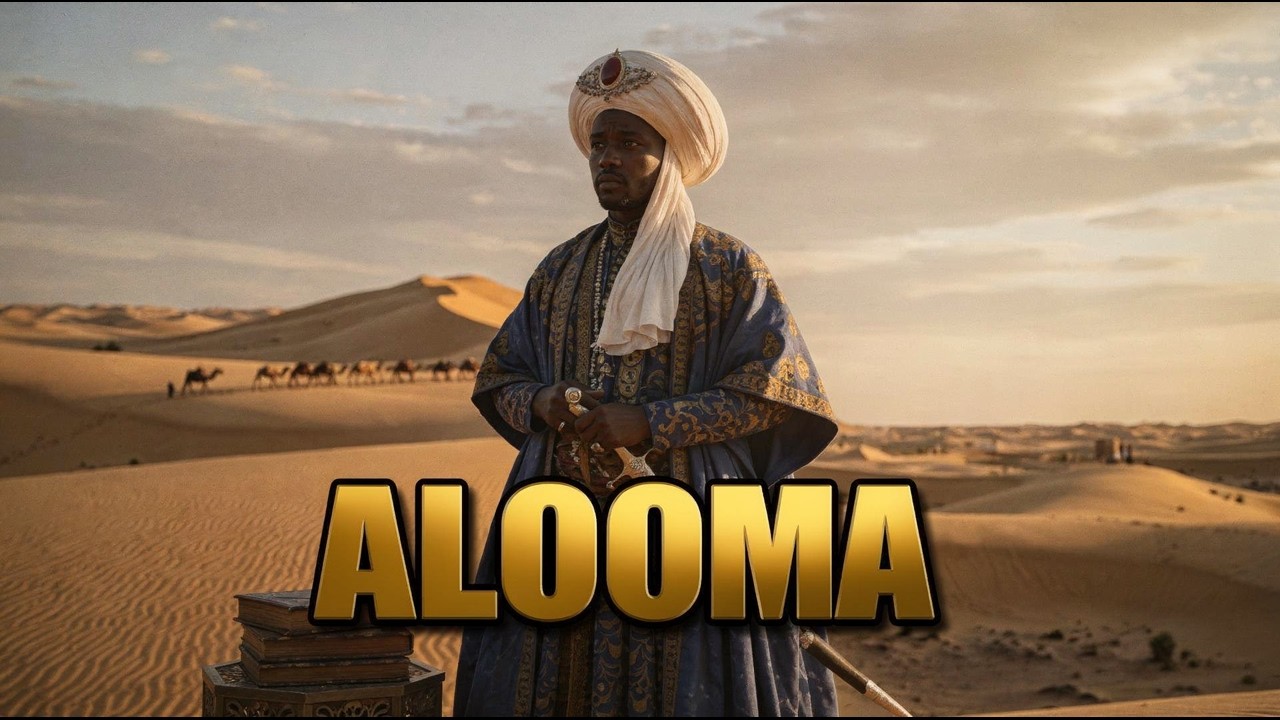
Among the Mandinka, the office of Mansa carried both political and sacred weight. A Mansa was not simply a head of state but a steward of balance — between provinces, between trading cities like Timbuktu and Gao, and between the human world and the unseen forces oral tradition holds accountable for a ruler's fortune. When Mandinka storytellers speak of Abu Bakr II's voyage into the Atlantic, they are not just describing a sea journey. They are describing a ruler who reached past the limits of what his own scholars and griots said was knowable.
The title Kankoro Sigi, held by Mansa Musa before he ascended, named a real and trusted role: deputy or regent, the one who kept the machinery of empire running in the ruler's absence. This detail matters because it reframes Musa not as an ambitious heir waiting for a chance, but as a disciplined administrator thrust into command. Mandinka oral tradition takes care to preserve that distinction — succession earned through readiness and service, not through scheming for the throne.
Historical Background
By the early 1300s, the Mali Empire under Abu Bakr II (sometimes rendered Abubakari II in Arabic-language chronicles) controlled goldfields, trans-Saharan trade routes, and a bureaucracy that drew scholars from Cairo and merchants from across West Africa. This was the empire Mansa Musa would later carry to even greater fame on his hajj to Mecca, an expedition so lavish it reportedly disrupted gold prices in Egypt for years.
The account of Abu Bakr II's Atlantic expeditions comes down to us primarily through the 14th-century Arab historian al-Umari, who recorded testimony gathered in Cairo — testimony that traces back, ultimately, to what Malian courtiers and travelers told outsiders about the transfer of power. Historians disagree sharply on how literally to read it: some see a genuine maritime expedition west across the Atlantic, others read it as an origin story built to explain, and dignify, an unusual succession. What is not in dispute is the historical fact at the center of it — Mansa Musa did not inherit the throne through the death of a father or through conquest. He inherited it because his predecessor left, gave him the throne outright before departing, and never returned.
The Story Behind It
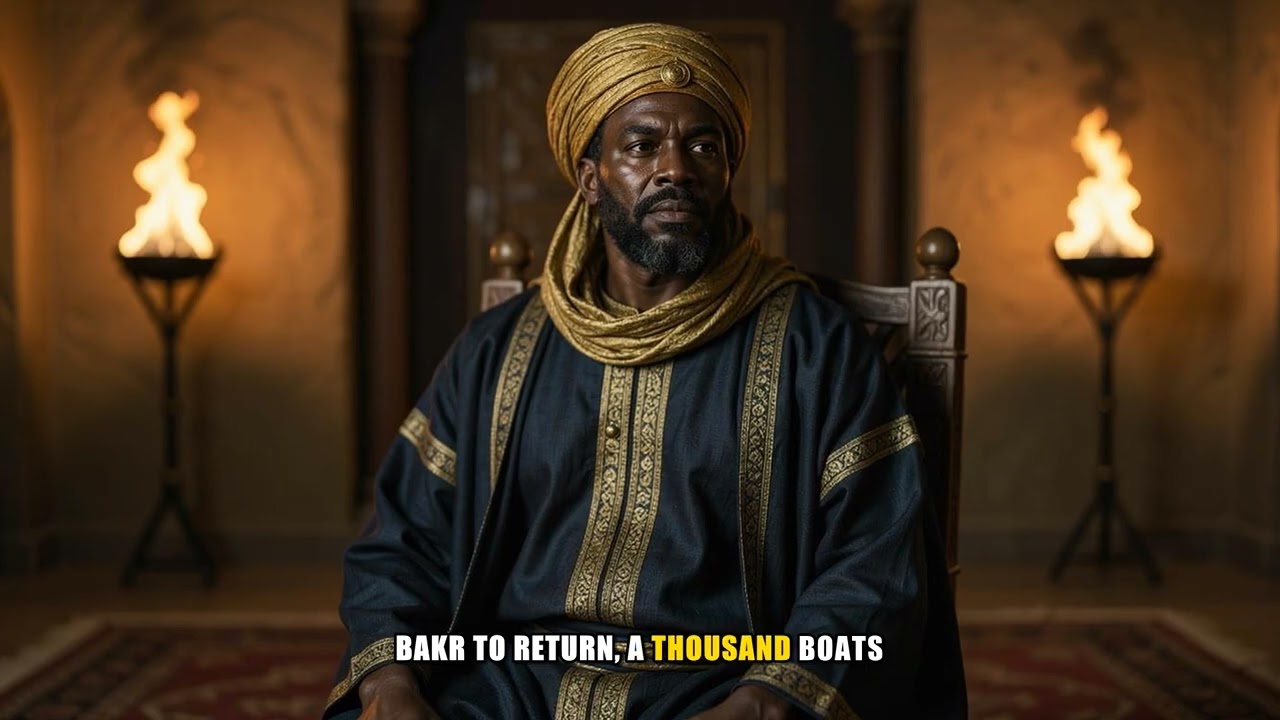
The oral tradition builds the story around scale and finality. Not a single scout ship but a fleet — 2,000 vessels, with 1,000 more held in reserve — loaded with provisions meant to last for months or years. This was not an exploratory gesture; it was framed as conquest of the unknown itself, ordered by a ruler unwilling to accept that the world's map simply stopped at a blank space past the horizon.
Musa's role during the waiting period is where the story does its quiet work. He did not seize power in Abu Bakr's absence. He collected taxes, settled disputes, and received scholars and merchants exactly as his predecessor had — a vigil, not a bid for the throne. When a single captain returned describing a vast oceanic current that had seized the rest of the fleet, Musa reported it faithfully rather than using it to claim authority.
Abu Bakr II's response is the hinge of the entire narrative: rather than treating the loss as a warning, he resolved to go himself, and before departing a second time, he transferred the empire to Musa completely and irrevocably, saying plainly that if he did not return, the throne belonged to Musa. That fleet, too, vanished — no wreckage, no message, no survivor. The tradition is precise that Musa never asked for the throne. It was left to him, deliberately, by a ruler who chose the sea of darkness over the certainty of his own empire.