Skip to content African Facts & Fables Fables The Independence Files How Ghana Became Africa's First Free Nation The Independence Files · Ep. 5
How Ghana Became Africa's First Free Nation West Africa· Akan· Contemporary· Legends & Heroes· 15 min From colonial exploitation to the midnight cry of freedom — this is the complete story of how Ghana became the first sub-Saharan African nation to break free from colonial rule.
TranscriptRead along · tap any line to jump there Search the transcript 0:03 The Gold Coast, Britain's wealthiest African colony. Gold gleaming from deep mines, cocoa plantations stretching to the horizon. Diamonds pulled from riverbeds. Timber felled from ancient forests. For over a century, Britain 0:19 extracted fortunes from this land. The wealth flowed one direction out across the Atlantic to London. But the Africans who lived on this land had nothing. No vote, no representation, no say in their own future. They worked the gold mines 0:36 for pennies. They harvested cocoa that made European chocolate empires rich. 0:41 Their children attended schools that taught British history, not their own. 0:45 50 million pounds a year left this colony. Almost none came back. Then came the veterans, African men who fought across Burma, North Africa, and Italy for the British Empire. They were promised jobs, pensions, and respect. 0:59 When they returned, they got nothing. 1:02 These men had risked their lives for Britain's freedom. Now they wanted their own. Britain's answer was simple. Not yet. Maybe in 50 years. 3,000 British administrators lived in sprawling bungalows with manicured gardens. They 1:17 drank gin on verandas while African servants waited in silence. Government house in Ara gleamed white in the tropical sun, a monument to power that did not belong to the people it ruled. 1:30 But something was shifting. 1:32 February 28th, 1948. 1:36 Everything changed. On that morning, ex-servicemen marched peacefully through Accra. They carried no weapons. They wanted to deliver a petition to the governor. Simple demands, jobs for veterans, fair pensions, basic dignity. 1:51 They had fought for the empire. Surely the empire owed them this much. 1:56 Superintendent Imray stood at the crossroads. He gave the order that changed history. 2:03 Imray panicked. He ordered his men to fire on unarmed veterans. Sergeant Ajetti fell first, then Corporal Atipo, then Private Odati Lampe. Three men who had survived World War killed by the empire they served. The news spread like 2:19 wildfire through Ara. By nightfall, the streets erupted. Riots swept through the colony like a storm. Acra erupted first, then Kumasi, then the entire Gold Coast. 2:31 For 5 days, the colony burned with rage. 2:34 Not just the veterans, workers, students, market women, farmers, everyone who had swallowed colonial humiliation for decades suddenly refused to swallow anymore. Britain was caught completely offguard. They needed someone to blame and they chose badly. March 2:52 1948, Britain arrested six men they called troublemakers. The big six, leaders of the United Gold Coast Convention. Among them, a young organizer named Quaame Inruma. No trial, no formal charges, just midnight arrests and detention in a 3:10 remote fort. Britain's calculation was straightforward. Remove the leaders and the rebellion dies. They were catastrophically wrong. The arrests backfired spectacularly. Instead of crushing the movement, Britain created martyrs. The big six became instant 3:26 heroes across the colony. Their photographs appeared in every market, every barber shop, every home. When they were released after 2 months, crowds lined the streets. The men who walked into detention as politicians walked out 3:40 as legends. Ghana had its symbols. Among the six, one man stood apart. Quaamin and Kumar was not in elite intellectual content with gradual reform. He had studied in America and Britain. He had read Gandhi and Marcus Gave. He 3:56 understood something the others did not. 3:58 Independence would not be handed down from above. It would be seized from below by the people themselves. June 1949, Incrumar made his move. He split from the United Gold Coast Convention. The old guard wanted independence eventually 4:14 in 20 years. Perhaps Incrumar wanted it now. He founded the Convention People's Party. Not a party for the educated elite. a party for workers, farmers, market women, and youth. His slogan was two words, self-government. Now, 4:34 the convention people's party grew like nothing the Gold Coast had ever seen. 4:39 Within months, it had branches in every town and village. The party symbol, a red rooster, appeared painted on walls across the colony. In Kruma traveled constantly, speaking to crowds of thousands. His message resonated because it was simple. Freedom is not 4:57 negotiable. Freedom is now. Mikruma's genius was his strategy. He studied Gandhi's campaign against the British in India. Nonviolent resistance, civil disobedience. He adapted it for Africa. 5:11 On January 8th, 1950, he announced positive action. The plan was elegant in its simplicity. Do not fight the British. simply stop cooperating with them, stop working, stop paying taxes, stop everything. The Gold Coast shut 5:28 down completely. Dock workers walked off the job. Ships sat loaded in Takoradi harbor with no one to unload them. Gold mines fell silent. Railway workers crossed their arms. Government offices stood empty. Teachers left classrooms. 5:46 The entire machinery of colonial extraction ground to a halt. Britain could not run a colony that refused to be run. There was no violence, no looting, no burning. That was the discipline Inruma demanded and the people delivered. They simply stopped. 6:03 Day after day, week after week, British administrators sat at empty desks. 6:09 Colonial governors sent panicked cables to London. The message was the same everywhere. We cannot arrest an entire nation. The people have won the argument. London received the news with alarm. The Gold Coast, their most profitable African colony, had simply 6:26 stopped functioning. Revenue collapsed. 6:29 Exports halted. The colonial administration was paralyzed. Britain tried the only tool it understood, force. They declared a state of emergency. They arrested Enruma again, charged him with sedition, sentenced him to 3 years. Surely this would end it. 6:46 January 1950,Wame Enruma walked through the gates of James Fort Prison, a stone fortress on the Acra waterfront where enslaved Africans had once been held before crossing the Atlantic. The symbolism was not lost on anyone. The British were imprisoning an 7:03 African freedom fighter in a building once used to imprison enslaved Africans. 7:08 History was watching. 7:13 Behind bars, Inkruma continued to lead. 7:16 He wrote letters that were smuggled out. 7:18 He sent instructions to CPP organizers. 7:21 He read voraciously, preparing for the day he knew would come. Meanwhile, outside, the movement grew stronger with every day of his imprisonment. Britain had locked up the man but could not lock up the idea. Self-government now echoed louder. February 1951, 7:38 Britain made a calculated gamble. They held limited elections for local councils, hoping to channel African frustration into controlled democracy. 7:48 Voters across the Gold Coast lined up in the thousands. Many had never voted before. The results stunned the British. 7:55 The Convention People's Party won everything. 38 of 38 constituencies in major cities. A complete sweep. The people had done something extraordinary. 8:06 They voted overwhelmingly for a party whose leader was sitting in a prison cell. They voted for a man convicted of sedition against the very government holding the election. The message to Britain could not have been clearer. 8:19 This man speaks for us. Release him or your elections mean nothing at all. 8:24 February 12th, 1951. 8:27 The gates of James Fort prison opened. 8:30 Quaame Ningruma walked out into the Acra sunlight. He did not go home. He did not rest. He went directly to the governor's office. As he later wrote, "I came out of jail and into the assembly without going home. From prisoner to government 8:45 leader in one extraordinary year." The British governor had no choice. He appointed Incrim leader of government business. Not full prime minister, not yet. But the symbolic power shift was unmistakable. An African freedom fighter 9:01 fresh from prison now sat across the table from his colonial jailer negotiating not as a supplicant but as the legitimate voice of a nation demanding its freedom. 1952 Nruma became prime minister but Britain still controlled defense and foreign 9:17 policy. It was progress but not freedom. 9:21 Nruma played the long game. He built institutions, expanded education, invested in infrastructure, and kept winning elections. 1954, CPP wins again. 1956, final referendum, 71 of 104 seats. The mandate was undeniable. July 1956, the British 9:44 Parliament passed the Ghana Independence Act. The date was set. March 6th, 1957. 9:51 No more negotiations, no more conditions. Freedom was coming and not a single shot had been fired. No guerilla war, no foreign intervention, just mass mobilization, disciplined resistance, and one man's unshakable belief that the people would prevail. 10:12 March 5th, 1957. 10:15 Ghana's last day as a British colony. In Ara, the old polo grounds filled with humanity. 30,000 people packed the stadium. Torches flickered in the warm evening air. Street parties erupted across every town and village. After 62 10:31 years of colonial rule, this was the last sunset. Tomorrow, the Gold Coast would be gone forever. The world came to witness. United States Vice President Richard Nixon arrived representing America. The Duchess of Kent came for 10:45 Britain. Delegations from across Asia and Africa filled the grandstands. And in the crowd, a 28-year-old Baptist minister from Montgomery, Alabama, Dr. 10:56 Martin Luther King, Jr. He had come to see freedom born. He would take its lessons home. The clock crept toward midnight. 30,000 people fell quiet. 11:06 Every eye turned to the flag pole where the British Union Jack still hung against the night sky. For 62 years it had flown over this land, over the mines, over the plantations, over the people who worked them for someone else's profit. Now its time was measured 11:22 in seconds. Midnight the Union Jack came down slowly, deliberately, and in its place rose a new flag. Red for the blood of ancestors who resisted. Gold for the wealth of the land. Green for the forests and fields. And at its center, a 11:41 single black star, the symbol of African freedom. The crowd erupted. Fireworks split the sky. Ghana was born. Kruma stepped to the podium. Tears streamed down his face. His voice carried across 30,000 souls and a listening world. At 11:59 long last, the battle has ended, and thus Ghana, your beloved country, is free forever. The crowd roared. People wept openly. Strangers embraced. In the crowd, Martin Luther King Jr. wept, too. 12:15 Africa's first dawn had broken. Martin Luther King Jr. would later write that Ghana's independence was the beginning of the end of colonialism in Africa. He returned to America with a new conviction. If Africans could free themselves through nonviolent 12:31 resistance, so could black Americans. 12:33 Ghana's midnight ceremony did not just free one nation. It lit a fire that would burn across continents and generations. 12:44 For in Kumar, Ghana's freedom was only the beginning. He declared that Ghana's independence is meaningless unless it is linked with the total liberation of Africa. April 1958 he hosted the first conference of independent African states 13:00 in Ara. Ghana became the headquarters of pan-Africanism. 13:04 In Krumar funded liberation movements across the continent. His vision was not one free nation. It was one free continent. Ghana proved it was possible and Africa listened. 1960 became the year of Africa. 17 nations gained 13:20 independence in a single year. Cameroon, Seneagal, Mali, Congo, Nigeria, Somalia. 13:28 One after another, the flags of new nations rose across the continent. In 1957, only three subsaharan nations were free. By 1965, 37 stood independent. 13:40 Ghana did not fight a guerilla war for independence. There were no mountains filled with rebels, no foreign allies supplying weapons. Instead, workers crossed their arms. Students stayed home. Market women refused to sell. An 13:55 entire nation simply said no. And the greatest empire in history could not force them to say yes. Unity was the weapon. Discipline was the ammunition. 14:05 Every March 6th, Ganions gather at Independent Square. They stand before the black stargate that Incruma built. 14:13 They remember the veterans who marched, the workers who stopped, the leader who walked from prison to power. They remember that freedom was not given. It was taken peacefully, strategically, collectively. And when they look across 14:27 the continent, they see their legacy everywhere.Wame and Kruma prove that freedom does not require violence. It requires unity. It requires strategy. It requires a people willing to stop the machinery of their own oppression. And 14:41 when Africa saw Ghana rise, they rose, too. This is how Ghana became Africa's first free nation. And Africa has never been the same. Captions from YouTube. Automatic captions can mishear names and places.
Episodes The Independence Files · 8 episodes
·
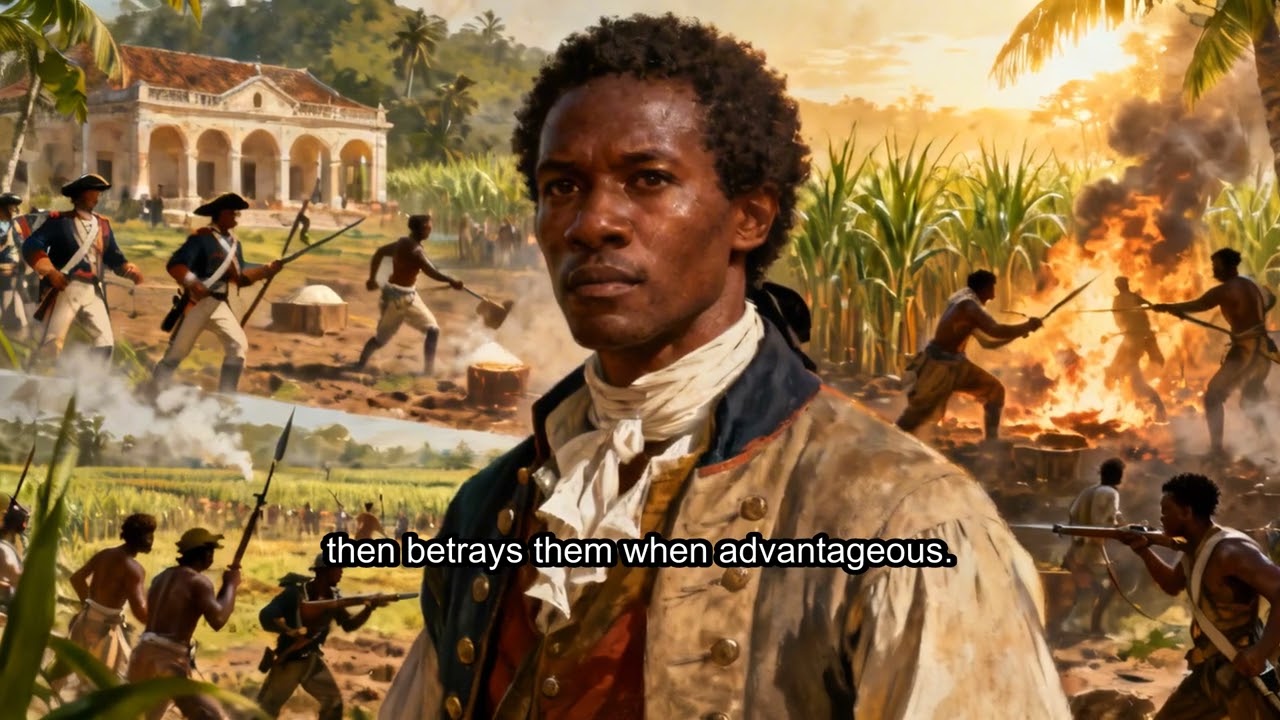
Haiti: The Impossible Revolution 27 min The ONLY successful slave rebellion in all of human history.
·
Algeria: The 8-Year War That Broke France 18 min For 132 years, France claimed Algeria wasn't a colony—it WAS France. But on November 1, 1954, Algerian revolutionaries launched a guerrilla war that would last 8 brutal years, cost 1.5 million lives, and break French colonial power forever.
4
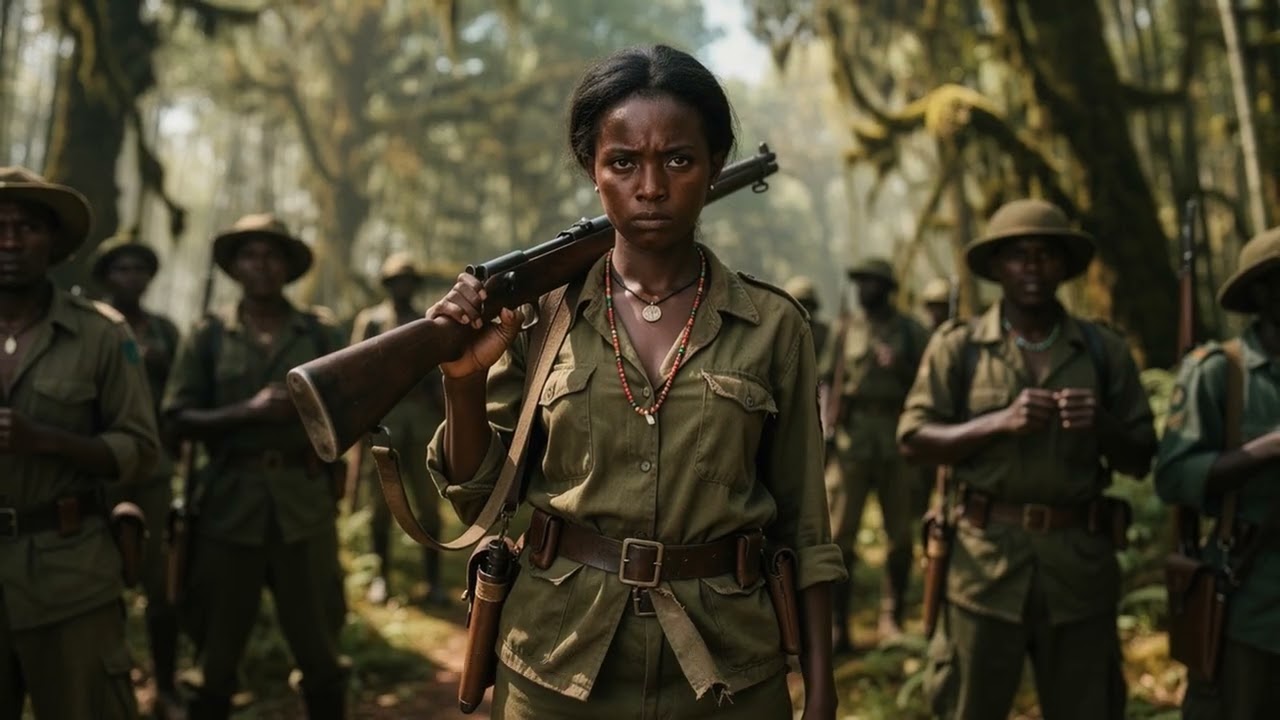
4. The Mau Mau Uprising Britain Tried to Erase13 min The Independence Files: Episode 4 — The Mau Mau Uprising Britain Tried to Erase
5
5. How Ghana Became Africa's First Free Nation15 min Now playing
From colonial exploitation to the midnight cry of freedom — this is the complete story of how Ghana became the first sub-Saharan African nation to break free from colonial rule.
6
6. The Philosopher Who Beat Portugal15 min How an agronomist from Guinea-Bissau became the most brilliant revolutionary strategist in African history — and defeated the Portuguese Empire.
7
7. How FRELIMO Defeated Portugal: Samora Machel's People's War16 min How did a nurse with a fourth-grade education defeat one of Europe's oldest empires?
8
8. Three Men Declared Themselves President on the Same Night16 min On November 11, 1975, Angola gained independence at midnight. But instead of celebration, three different leaders — Agostinho Neto, Jonas Savimbi, and Holden Roberto — each declared themselves president from three different cities. What followed was one of the Cold War's bloodiest proxy wars, lastin
9
9. 27 Years in Prison: The Nelson Mandela Story15 min 27 years in prison. One man's refusal to break. The story of how Nelson Mandela and the fight against apartheid changed not just South Africa — but the entire world.