Cultural Context
Mozambique's independence struggle wasn't fought by a single ethnic bloc but by a coalition of peoples — Makonde, Makua, Shangaan, Sena, Tsonga, and others — who had lived under the shared weight of Portuguese rule since 1498. Samora Machel, born in Gaza province to a Shangaan farming family, understood this diversity firsthand, which is why his rallying cry inside FRELIMO (the Mozambique Liberation Front) was blunt: "For the nation to live, the tribe must die." This wasn't an erasure of identity but a wartime political strategy — uniting dozens of peoples under one liberation banner so Portugal couldn't exploit ethnic division the way colonial administrations often did.
That unity extended to gender roles in ways rooted in the movement's practical needs and revolutionary ideology. Josina Machel, Samora's wife, commanded a women's detachment, trained fighters, and ran literacy campaigns — work that pushed against both colonial law and older customary restrictions on women's roles. FRELIMO framed its war as more than removing the Portuguese flag; it was a project of remaking Mozambican society from the ground up, in the schools, clinics, and courts it built inside the very territories it liberated.
Historical Background
Portugal's presence in Mozambique dates to 1498, when Vasco da Gama's ships reached the coast searching for routes to India. What began as trading posts hardened over centuries into one of the longest-running colonial occupations in Africa. By the 1960s the toll was staggering: 97% illiteracy among Mozambicans, a life expectancy of just 38 years, and chibalo — forced labor that functioned as slavery under a different name. Portugal insisted Mozambique was an "overseas province," not a colony, but the daily reality for Mozambicans told a different story.
On June 25, 1962, exiled nationalists gathered in Dar es Salaam, Tanzania, and merged three separate movements into FRELIMO. Its first president, Eduardo Mondlane, held a PhD from Northwestern University and had worked at the United Nations — a leader who believed only total independence, not negotiated concessions, would do. Samora Machel joined in 1963 after years working as a nurse in Lourenço Marques (now Maputo), where he watched Portuguese patients receive full care while Mozambican patients were left to die of preventable illness. He later said the hospital taught him that "the colonial system kills more people than any disease." That conviction carried him from healer to guerrilla commander within a year.
The Story Behind It
FRELIMO launched its first coordinated attacks on September 25, 1964, with roughly 250 fighters against a colonial force that would eventually swell to 70,000 Portuguese troops backed by helicopters and napalm. The guerrillas survived by refusing to fight on Portugal's terms — striking fast, vanishing into the bush, and relying on villagers for food, intelligence, and shelter. As Machel put it, the people were the ocean and the guerrillas were the fish.
What set FRELIMO apart wasn't only its combat tactics but its governance. In the liberated zones of northern Mozambique, fighters built more than 800 schools where children studied under trees as Portuguese bombs fell nearby, ran medical clinics treating over 100,000 patients a year, organized agricultural cooperatives to break the colonial plantation system, and established people's courts in place of Portuguese law. This was a nation being built in real time, inside a war zone.
The movement nearly collapsed when Mondlane was killed by a parcel bomb in February 1969, almost certainly the work of Portuguese secret police. Internal rifts between moderates and radicals threatened to fracture FRELIMO entirely. Machel took over as president and military commander in 1970, fusing Marxist-Leninist organizing with African nationalist unity to hold the coalition together, while support from China, the Soviet Union, Cuba, and neighboring Tanzania strengthened the war effort.
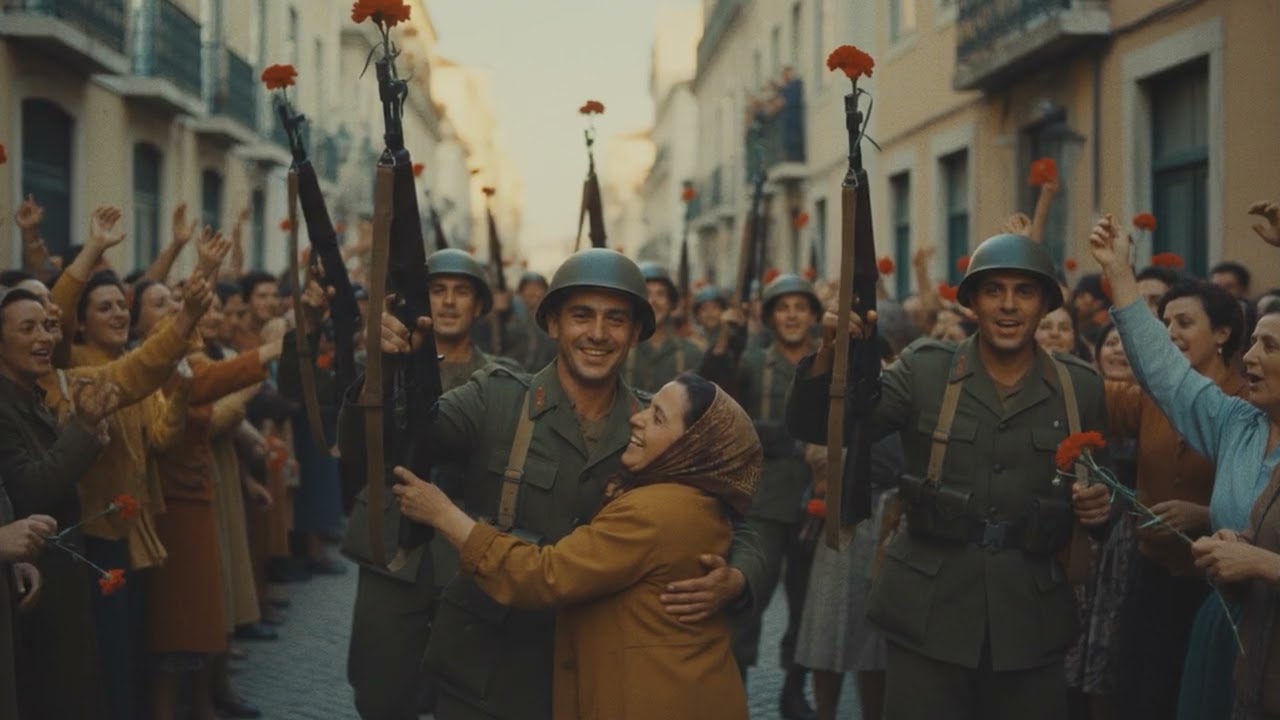
The turning point came on December 16, 1972, at Wiriyamu village in Tete Province, when Portuguese soldiers surrounded and executed more than 400 civilians — women, children, and elders — then burned the village to erase the evidence. Portugal denied the massacre, but missionaries smuggled documentation to the outside world, and European newspapers published the proof. Portugal's already fraying moral claim to its colonies collapsed. Two years later, the authoritarian Estado Novo regime itself fell in Lisbon's Carnation Revolution of April 1974, a coup driven partly by exhaustion with unwinnable colonial wars in Mozambique, Angola, and Guinea-Bissau. The new Portuguese government moved quickly to negotiate withdrawal, and on June 25, 1975 — thirteen years to the day after FRELIMO's founding in Dar es Salaam — Mozambique became independent, with Samora Machel as its first president.