Cultural Context
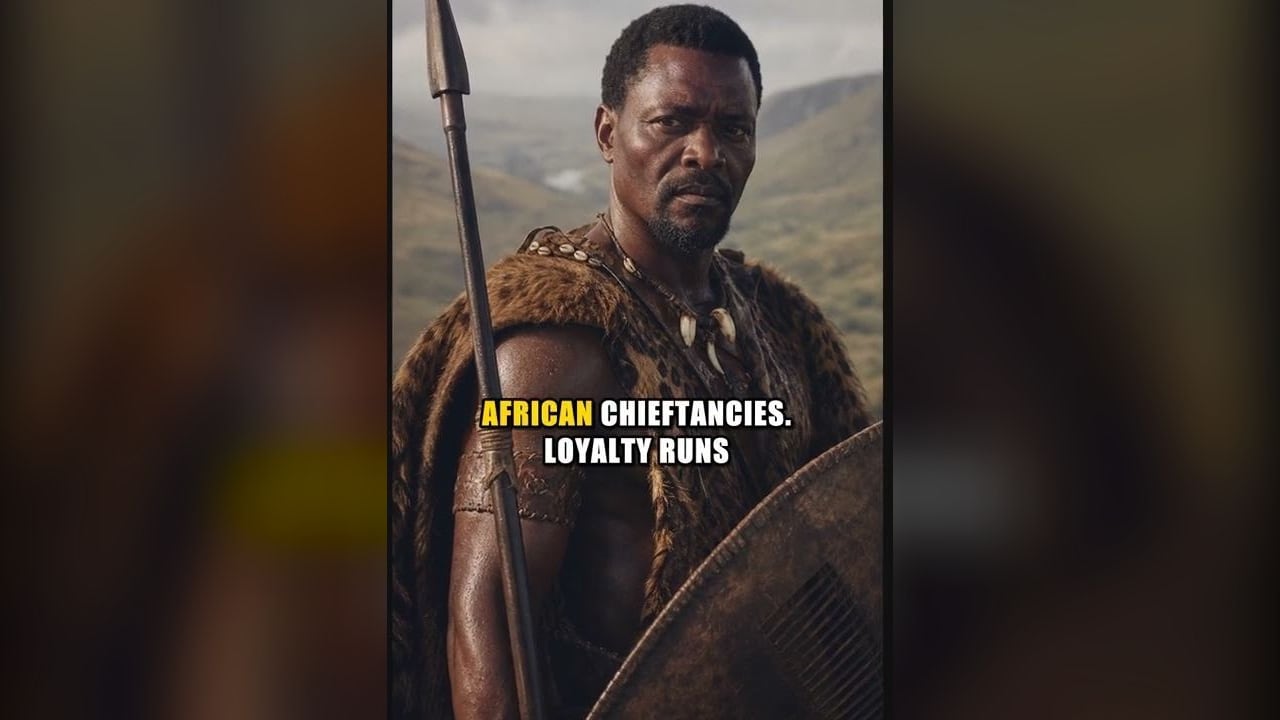
Among the Zulu people, history has never lived only in written archives. It lives in izibongo — the praise poetry recited for kings and chiefs — in oral genealogies kept by izinyanga zomlando (custodians of history), and in the memory of homesteads and regiments whose descendants still carry their names. Shaka Zulu occupies a singular place in this living tradition: he is remembered as the man who took a small chieftaincy on the Mfolozi River and forged it into a regional power within a single generation.
But oral tradition is not static, and it is not neutral. Praise poetry composed for Shaka during his reign, and recomposed by court poets under his successors, already carried political weight — different reigns needed different versions of the founder. This matters here because the same instinct that shaped Zulu oral memory in the 1820s and 1830s shaped how later writers, historians, and nationalist leaders approached Shaka too. Everyone telling his story was, in some sense, continuing a very old practice: deciding which parts of a powerful man's life deserved to be remembered, and why.
Historical Background
The written record on Shaka begins almost entirely with two Englishmen, Henry Fynn and Nathaniel Isaacs, who lived at his court in the final years of his reign. Their accounts describe genuine military innovation — the short stabbing spear, the encircling "horns" formation, age-regiment discipline — alongside genuine brutality: forced mourning rituals, executions, a court where refusal was not survivable. Both things were true. But Fynn and Isaacs were writing for British and colonial audiences who already expected African rulers to be savage, and their narratives were selected, translated, and later cited for exactly that purpose. Colonial administrators and settler historians used these accounts for a century afterward as proof that African societies required European governance to be "civilized."
A second layer of interpretation arrived with 20th-century historians studying the Mfecane — Zulu for "the crushing" — the era of mass displacement, warfare, and state formation that swept southern Africa in Shaka's time. Some historians made Shaka the primary engine of this upheaval, a single man reshaping the map of an entire subcontinent. Later scholarship has pushed back hard, arguing that drought, the slave trade radiating from Delagoa Bay, and pressures unrelated to the Zulu kingdom were also major drivers — and that pinning the Mfecane on one African king was, itself, a useful way for colonial and apartheid-era historians to avoid examining their own role in regional destabilization. That debate remains open today.
The Story Behind It
Within days of Shaka's assassination in 1828, his brother Dingane held the court, the regiments, and — critically — the official account of what had happened and why. Whoever controlled the narrative controlled the legitimacy of the new reign. This was the first of many retellings, and it set a pattern: every generation that inherited Shaka's story reshaped it to serve present needs.
By the mid-20th century, Shaka had become a foundational symbol for Zulu nationalism and for South Africans resisting colonial and apartheid rule. Independence and liberation movements across the continent, looking for evidence that African peoples had built sophisticated states and armies before European conquest, found in Shaka a ready answer: not a savage warlord but a strategist, an institution-builder, proof of African self-determination. This version was every bit as selective as the colonial one — it emphasized genius and nation-building while setting aside the same executions and forced conformity the colonial writers had foregrounded.
Both Shakas are constructed from the same historical record. Both are "real" in the sense that matters most for a legend: they shaped what people believed, demanded, and were willing to do in his name. What survives underneath both is narrower but sturdier — a man who inherited a minor chieftaincy, built a regional power through institutional innovation as much as violence, and was killed by his own brothers in his own homestead at roughly forty years old. The legend, as it turned out, outlived all of them.