Cultural Context
Among the Shona peoples of present-day Zimbabwe and parts of Mozambique, the mbira dzavadzimu — often called the "voice of the ancestors" — is far more than an instrument. Built from metal keys mounted on a wooden soundboard and often played inside a resonating gourd (deze), the mbira produces a cascading, cyclical melody that Shona musicians and listeners understand as a bridge between the living and the spiritual world.
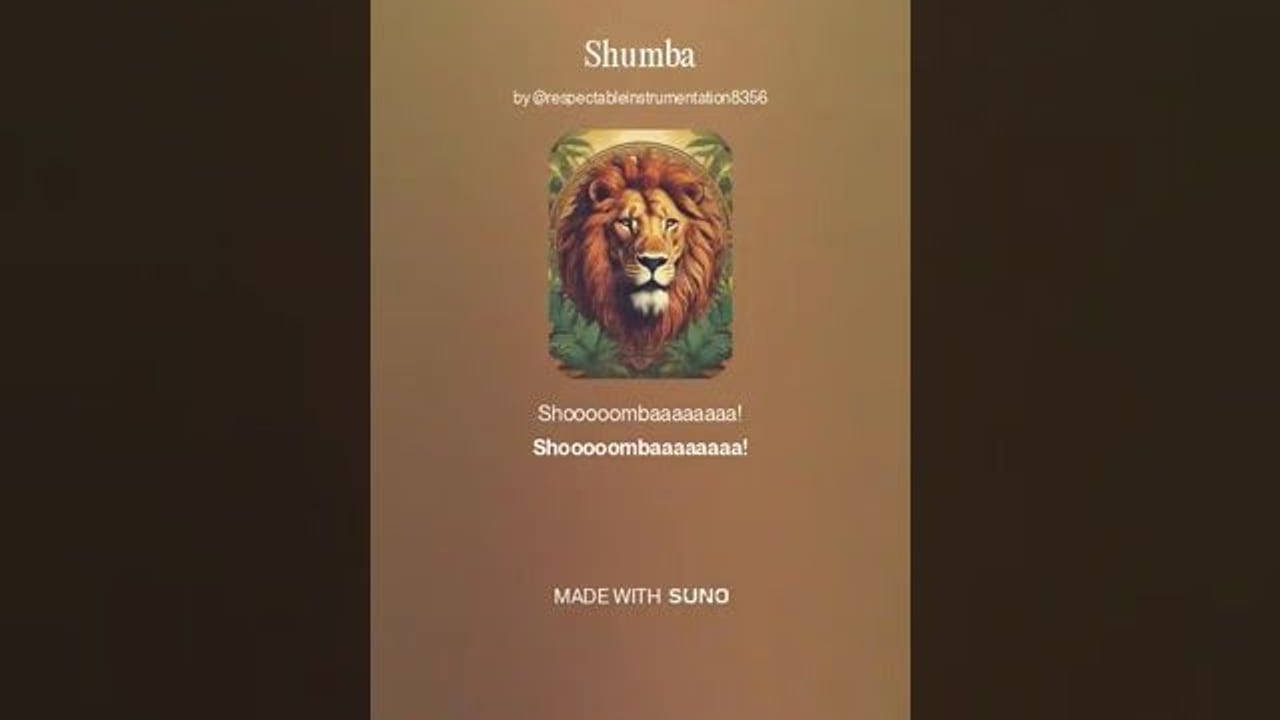
Songs like "Shumba" (meaning lion) belong to a repertoire of mbira classics that are performed at bira ceremonies — all-night gatherings where families call on ancestral spirits (vadzimu) for guidance, healing, or protection. The lion in this context is not simply an animal from the savanna; it is a symbol carried through praise poetry, totems (mitupo), and oral tradition as an emblem of chiefly authority, bravery, and spiritual weight. To sing "Shumba" is to invoke those qualities directly into the room.
It's worth naming clearly: this is a living tradition. Mbira players today, from rural homesteads to concert stages in Harare and abroad, continue to learn, adapt, and perform these songs, meaning "Shumba" is not a relic but an active part of contemporary Shona musical and spiritual life.
Historical Background
The mbira's roots stretch back many centuries within Shona-speaking communities, with instruments and playing techniques passed down through apprenticeship — often within families — rather than written notation. Colonial-era missionaries and administrators frequently dismissed mbira music as "pagan" noise tied to spirit possession, and its public performance was suppressed in various periods. Despite this pressure, the tradition persisted in villages and among traditional healers (n'anga) and spirit mediums, who relied on the music to properly conduct ceremonies.
The lion holds a particular historical charge in Shona society because it is one of the totem animals (mitupo) claimed by certain clans, including lineages associated with chieftainship. Praise names invoking Shumba appear in oral poetry recited at installations of chiefs and in stories about the founding of communities. A song built around the lion, then, sits at the intersection of two long-standing practices: totemic praise poetry and mbira-accompanied spiritual song, both of which predate colonial contact and both of which survived attempts to erase them.
The Story Behind It
"Shumba" as a mbira piece works the way much of this repertoire does: through repetition, interlocking melodic lines, and call-and-response vocals that build in intensity rather than unfolding as a linear narrative. Listeners familiar with the tradition recognize the lion's presence less through explicit storytelling and more through the mood the music creates — a steady, circling rhythm meant to evoke the lion's watchfulness and unhurried power.
In performance, singers often layer in praise phrases and vocal calls (mahon'era) over the mbira's cycling pattern, honoring the lion's role as "king of the jungle" not as a Western fairy-tale trope but as a stand-in for the qualities Shona communities associate with strong leadership: patience, restraint, and the willingness to act decisively when needed. The repeated musical phrases mirror how oral tradition itself works — meaning accumulates through return and variation, not through a single telling. Each performance of "Shumba" is understood as a fresh act of invocation, shaped by the particular gathering, the particular players, and the ancestral spirits believed to be present that night.