Cultural Context
For the Shona peoples of Zimbabwe's Eastern Highlands, mountains are never just geography — they are dwelling places of spirit. Mt Nyangani, the country's tallest peak, sits at the heart of this understanding. It is described in oral tradition not as an inert rock formation but as a living presence, one that can welcome, test, or swallow those who enter its forests carelessly.
Central to this worldview are beings like the Njuzu, water spirits associated with rivers, pools, and mist, often depicted as beautiful and commanding, part human and part fish-tailed. Njuzu are known across many Shona communities as guardians of water and knowledge, capable of taking people beneath the surface of a river or into an otherworldly realm to teach or test them. Alongside them stand spirits such as Ngozi, avenging presences tied to unresolved wrongdoing and injustice, and Jukwa, another mountain-associated spirit named in Nyanga-area tradition. These are not villains in a children's story — they are moral forces, reminders that the living world and the spirit world are in constant relationship, and that carelessness or disrespect has consequences.
This is why elders in villages at the mountain's foot pass down warnings about entering the forest or the "sacred thicket" without proper respect. The warnings are not superstition for outsiders to marvel at; they are active guidance, still spoken today, about how to conduct oneself near a place considered alive.
Historical Background
Mt Nyangani rises over 2,500 metres in the Nyanga highlands of eastern Zimbabwe, an area long inhabited by Shona-speaking communities whose oral traditions about the mountain predate colonial contact and have persisted through it. Long before the region was mapped by European surveyors, local communities understood the mountain as bounded by rules — places you did not go, words you did not say carelessly, offerings that were owed to the spirits who kept order there.
Colonial administrators and later tourists often treated these accounts as quaint legend, even as the mountain gained a reputation, documented into the modern era, for hikers who went missing on its slopes without explanation. Rather than dismissing these disappearances, Shona communities living near the mountain have generally understood them within the existing spiritual framework: the mountain has its own authority, and those who enter without respect — for its spirits, its silence, its rules — may not be permitted to leave on ordinary terms.
This continuity matters. The story of Nyangani is not a relic being reconstructed from fragments; it is a tradition that has adapted across centuries, incorporating new events (like modern disappearances) into an older, coherent understanding of the mountain as sacred and sentient.
The Story Behind It
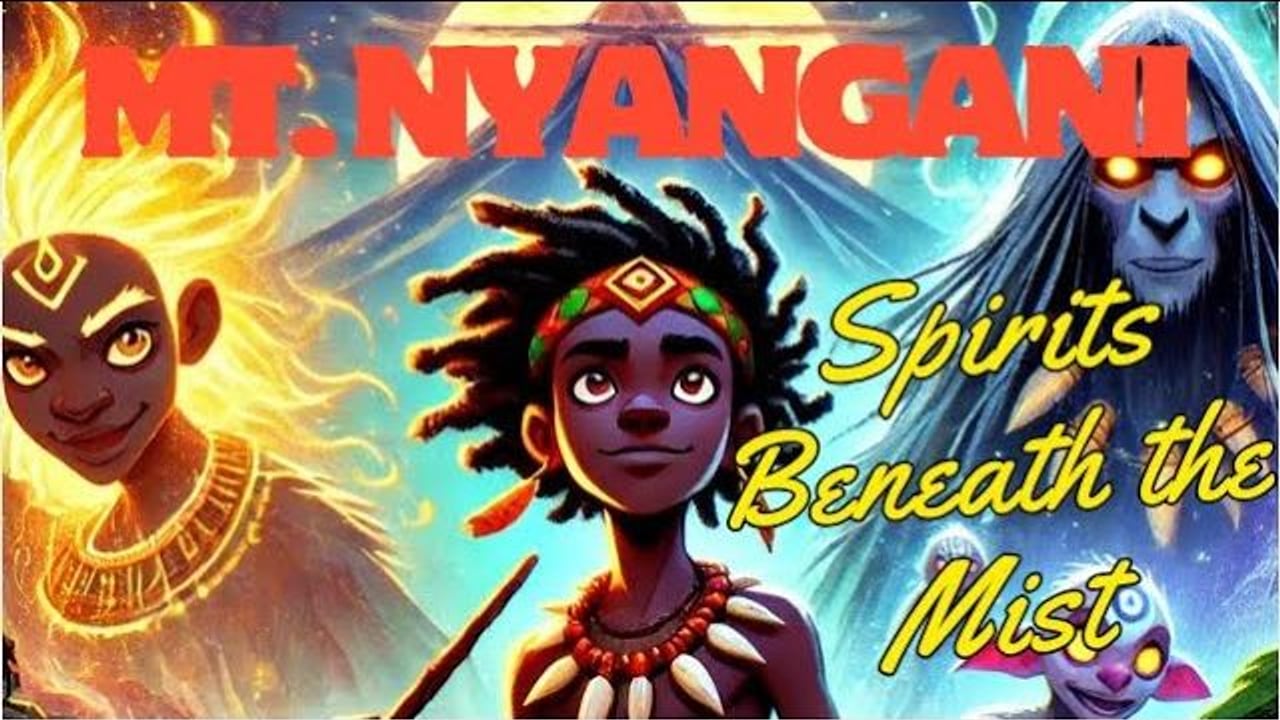
The tale of Famai (sometimes rendered Fomai), the mischievous teenager who is dared by his friends Tendai and Chido to climb into the sacred thicket of Nyangani, follows a shape common to Shona teaching stories: a young person's boldness leads them across a boundary that should have been respected, and the crossing becomes a journey of instruction rather than simple punishment.
Famai's friends warn him using the community's own memory — the tourist and the two girls who "never came back" — but he goes anyway, driven by pride rather than malice. When he speaks the ritual words at the sacred thicket, the ordinary forest gives way to the world of spirits: mist rises, the wind stills, and Njuzu appears, glowing and fishtailed, more curious than cruel. She calls him brave but foolish, and tells him plainly that trespassing into the spirit world means he must now face its inhabitants and learn from them before he can return.
His next encounter, with Ngozi — the avenging spirit of the wronged and the silenced — sharpens the story's moral core. Ngozi does not simply frighten Famai; Ngozi demands that he reckon with what it means to cause harm and to be held accountable for it. This is the heart of why the tale endures: it is not a ghost story meant to scare children away from a mountain, but a structured lesson, delivered through spirit encounters, about respect, consequence, and humility before forces greater than oneself. Famai's journey through trials — each spirit testing a different failure of character — mirrors initiation narratives found throughout Shona oral tradition, where a young person only becomes an adult, or a wiser person, by surviving an encounter with the sacred and returning changed.