Cultural Context
For the Shona people of Zimbabwe, the mbira dzavadzimu — literally "voice of the ancestors" — sits at the center of ceremonial life. Built from a wooden soundboard fitted with metal keys plucked by the thumbs and forefingers, the mbira produces a dense, layered sound that Shona musicians describe not as melody alone but as a doorway. Its music is inseparable from the bira, an all-night ceremony held to invite ancestral spirits (vadzimu) to speak, guide, and heal through a chosen medium.
The mbira rarely plays alone. It is joined by hosho (gourd shakers) and ngoma drums, whose interlocking rhythms create a dense, hypnotic weave of sound. This is deliberate: in Shona practice, no single voice carries the message to the ancestors. It takes the layered conversation of drum, shaker, and mbira — plus the singing and clapping of everyone present — to open that channel. Understanding the mbira means understanding that, for the Shona, music is not entertainment set apart from spiritual life. It is spiritual life, given rhythm and shape.
Historical Background
The mbira tradition among the Shona stretches back many centuries, with some historians tracing its instrument family to the Great Zimbabwe period, when the kingdom's rulers used music and ceremony to reinforce their authority as intermediaries between the living and the spirit world. Long before written records touched the region, mbira players — often trained over years within specific families or lineages — served as keepers of songs tied to particular ancestral spirits, chiefly lines, and historical events.
Colonial administrations and missionaries in the nineteenth and twentieth centuries frequently viewed the bira ceremony and its music with suspicion, sometimes suppressing it as "heathen practice." Yet the tradition persisted in villages and among mbira families who continued teaching the instrument privately, passing specific songs — each with its own name, spirit affiliation, and proper occasion — from teacher to student by ear and by hand position, not by written notation. This resilience is why the mbira today is recognized not as a relic but as a continuously practiced art, one that Zimbabwean musicians such as Thomas Mapfumo later drew upon to shape modern Chimurenga music, carrying the instrument's ancestral voice into new political and cultural moments.
The Story Behind It
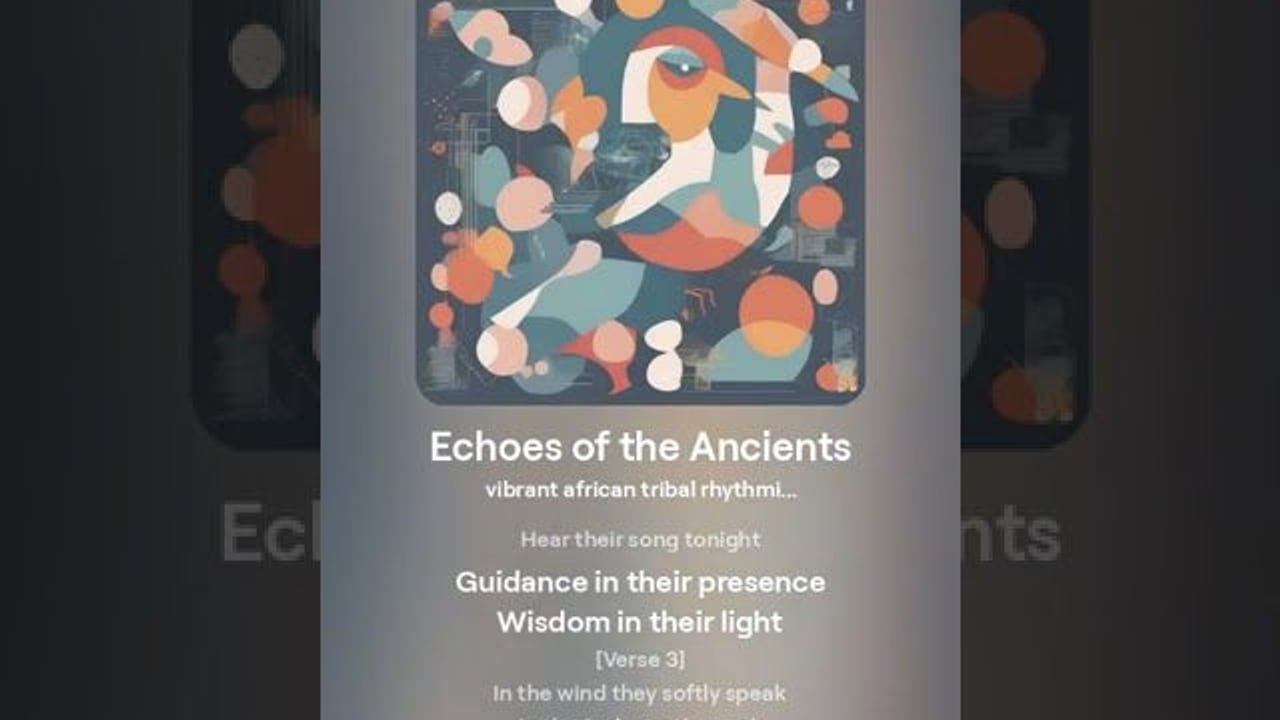
"Echoes of the Ancients" gathers its imagery directly from bira practice: voices whispering through the air, stones and shakers dancing in rhythm, fire's gentle creak, and drums that "convey their tales." These are not poetic inventions but descriptions of what actually happens at a ceremony. The bira is held through the night, often beginning at dusk and continuing until sunrise, because Shona belief holds that ancestral spirits move most freely in darkness and are drawn forward by sustained rhythm rather than a single song.
As the mbira's interlocking patterns repeat and layer, a spirit medium — chosen by lineage or by the spirit itself — may enter trance and become the vessel through which an ancestor speaks: offering guidance on family disputes, illness, or unresolved grievances. The phrase "talking drums convey their tales" in the song reflects a real function of ngoma rhythm at these gatherings: certain drum patterns signal specific spirits or stages of the ceremony, functioning almost as a spoken language understood by everyone present. The community's clapping and singing are not passive accompaniment — they are participation, sustaining the rhythmic conversation that keeps the channel to the ancestors open. In this way, the fable's central image, reaching "lines of time within your hand" to be led to "sacred land," captures something true: the mbira's rhythm is understood as a literal thread connecting the living hand to ancestral time.
Diaspora Connections
The mbira's reach extends well beyond Zimbabwe's borders. As Zimbabwean musicians and refugees moved abroad during the twentieth century — particularly through periods of political upheaval — mbira players carried the instrument and its ceremonial songs into diaspora communities in the United Kingdom, the United States, and elsewhere in southern Africa. Today, mbira circles exist in cities far from Zimbabwe, where practitioners, both Shona and non-Shona, gather to learn traditional songs like Nhemamusasa and Bangiza, maintaining the instrument's connection to ancestral practice even outside its home ceremonies.
This global spread has sparked ongoing conversation within Shona communities about how to honor the mbira's sacred function while sharing it as cultural heritage — a living negotiation, not a settled matter, that reflects the instrument's continued vitality rather than its fading into history.