Skip to content African Facts & Fables Fables Echoes from the Sahel: The African Empires That Changed the World West Africa
Echoes from the Sahel: The African Empires That Changed the World West Africa· Mandinka, Songhai, and Kanuri· Pre-colonial· Legends & Heroes· 16 min Imagine an empire so wealthy that when its ruler traveled, he distributed so much gold that he single-handedly disrupted economies across two continents. This wasn't fantasy—this was the Mali Empire.
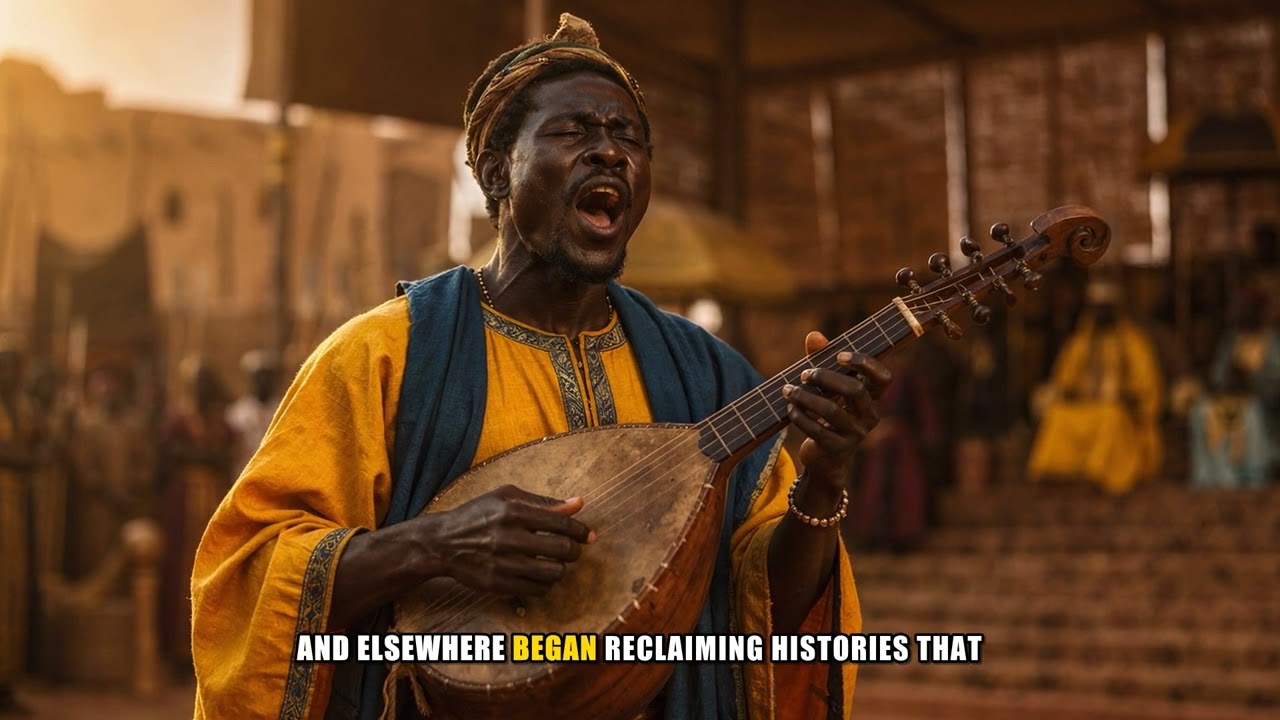
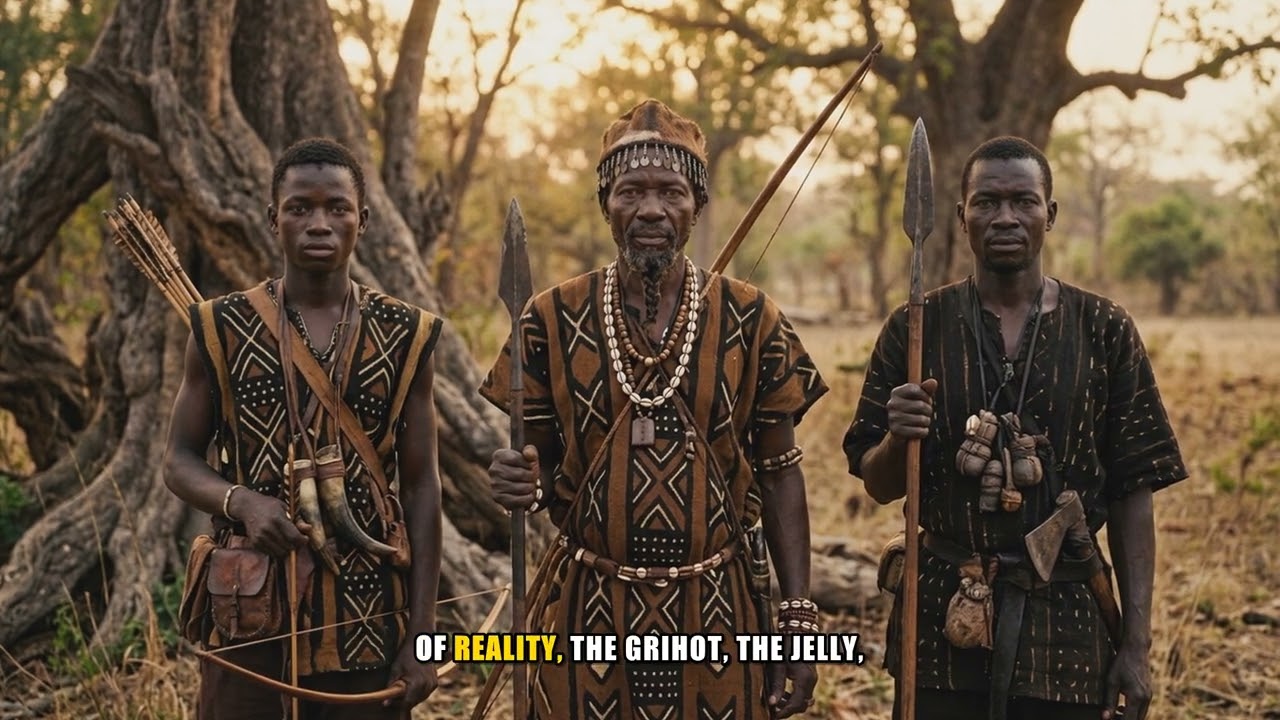
TranscriptRead along · tap any line to jump there Search the transcript 0:00 Imagine an empire so wealthy that when its ruler traveled, he distributed so much gold that he single-handedly disrupted economies across two continents. This wasn't fantasy. This was the Mali Empire, and its story is just one of 0:17 four extraordinary civilizations that rose in the African [music] Sahel. 0:21 Picture a city so renowned for learning that scholars journeyed thousands of miles to study in its libraries. A place where manuscripts numbered in the hundreds of thousands, where mathematics, astronomy, [music] and philosophy flourished. This was 0:35 Timbuktu, the intellectual heart of medieval Africa. Envision trade networks so extensive that they connected the heart of Africa to the Mediterranean, [music] to the Middle East, to Europe itself. Caravans carrying gold, salt, 0:49 and textiles crossed the Sahara [music] in journeys lasting months. These roots generated wealth that built empires lasting centuries. [music] These weren't fantasies or legends. They were the great empires of the Sahel, a vast region stretching across Africa 1:04 below the Sahara. For over a thousand years, these powerful civilizations dominated West Africa, building achievements that rivaled anything the medieval world had ever witnessed. 1:16 Ghana, Mali, Songhai, and Cannon Borneu. 1:21 These names represent some of humanity's greatest achievements. Yet their stories remain largely unknown outside Africa. 1:28 They controlled territories larger than European kingdoms, accumulated vast wealth, [music] and created cultural legacies that persist to this very day. 1:37 Today, we're going to uncover these magnificent empires together. We'll explore their rise from small kingdoms to continental powers. We'll examine their remarkable achievements. We'll understand their decline. And we'll discover their enduring legacies that 1:52 continue shaping modern West Africa even now. 1:57 The Sahel is a vast [music] transition zone between the Sahara Desert and the Savannah grasslands. It stretches across the entire African continent from [music] the Atlantic Ocean to the Red Sea. This semiarid region blessed with 2:11 seasonal rivers and strategic location became the cradle of great empires. The Niger River, the Seneagal River, and Lake Chad provided [music] water for agriculture and transportation. Gold lay in the southern hills, precious metal 2:25 that would make empires legendary. Salt came from the Saharan mines, as valuable as gold itself in regions where preserving food meant survival. Around 300 CE, the Sonica people founded what would become the Ghana Empire. Beginning 2:40 as a small chieftdom, Ghana grew steadily in power and influence. By the 9th century, its capital Kumbisal had become a major international trading center, drawing merchants from across the known world. Arab traders called Ghana the land of gold, and this 2:56 reputation spread throughout Europe and the Middle East. Ghana controlled the gold producing regions of Bambuk and Buret, [music] taxing every exchange between North Africa and subsaharan lands. [music] Control of gold meant control of immense wealth. Ghana 3:11 developed sophisticated governance systems. A king held supreme authority supported by centralized administration, provincial governors, a professional military force, and an established judicial system. This wasn't a primitive 3:26 society. It was a complex [music] state with institutions rivaling those of contemporary European kingdoms. Donna's decline began in the 11th century with devastating Al-Maravid invasions from the north. By the 13th century, the 3:40 empire had fragmented into smaller states, but Ghana's legacy endured. It established patterns of governance and trade that later empires would follow, perfect, and expand upon. 3:54 From Ghana's decline rose Mali, [music] an empire that would become the largest and most powerful in all of West African history. Around 1235, the legendary warrior Sundiata Keta unified the scattered Mandinka peoples, forging them 4:10 into a mighty empire through military genius and political [music] wisdom. 4:14 Sundiata's story preserved in epic poetry sung by go across generations tells of a disabled prince who overcame tremendous adversity. His decisive victory over the oppressive Sooso Empire marked Mali's glorious [music] beginning. Today, Grio still sing of his 4:34 courage, wisdom, and the nation he built. Mali grew to become the largest West African empire ever known. At its peak, it stretched from the Atlantic Ocean to the Niger Bend, [music] controlling territory larger than all of 4:48 Western Europe combined. Its influence extended [music] far beyond its borders, with tributary states paying homage to Mali's power. The capital city of Nyani became a major center of commerce, culture, and international diplomacy. 5:03 Merchants from across the Islamic world gathered in its markets. Ambassadors from distant lands sought audience with its rulers. Nyani stood as proof of Mali's continental importance. 5:15 Mansamusa, who ruled Mali from 1312 to 1337, [music] represents the empire's absolute peak. 5:23 His [music] wealth surpassed anything the medieval world had witnessed. His generosity became legendary across three continents. European maps began prominently featuring Mali, showing its golden king holding a scepter of gold. 5:36 His hajj pilgrimage to Mecca in 1324 became the stuff of legend across the known world. Traveling with an astounding caravan of 60,000 people, Mansam Musa distributed gold throughout his journey. Camels carried countless bars of gold. Servants wore [music] silk 5:55 and carried golden staffs. In Cairo, Mansamusa distributed so much gold that he single-handedly caused massive inflation, disrupting the Egyptian economy for more than a decade. Gold lost its value. Prices soared. A single African ruler had demonstrated wealth 6:13 beyond what the Mediterranean world could comprehend. Timbuktu became the crown jewel of Mali's intellectual achievement. The University of Sanor attracted scholars from across Africa, the Middle East, and beyond. Students traveled [music] thousands of miles to 6:29 study there. It became one of the great centers of learning in the entire medieval world. [music] Libraries held thousands of precious manuscripts on mathematics, astronomy, medicine, 6:39 [music] 6:40 jurisprudence, and theology. 6:43 Scholars produced original works and preserved ancient texts. Timbuktu rivaled Cairo, Baghdad, [music] and Cordoba as centers of Islamic learning. 6:53 This intellectual achievement proved Mali wasn't merely [music] wealthy. It was brilliantly sophisticated. Great mosques demonstrated sophisticated architectural knowledge using local materials and techniques. The Jingerber mosque commissioned by Mansam Musa 7:09 himself and designed by the Andalucian architect Essa Haley still stands today in Timbuktu as testament to their remarkable skill, vision, and enduring craftsmanship. 7:22 From Mali's decline rose Sanghai, which would become the largest empire in all of African history. Centered on the city of Gao along the Niger River, [music] Songhai represented the absolute peak of Sahelian civilization. The most 7:37 powerful, most organized, and [music] most extensive state Africa had yet produced. Sunni Ali, who ruled from 1464 to 1492, [music] established Songhai's dominance through military genius and relentless campaigning. He conquered [music] former 7:53 Mali territories, unified the Sanghai peoples, and created a professional standing army with powerful cavalry forces that swept across the Sahel, conquering all opposition. Sunni Ali transformed the Niger River into a military highway, creating formidable 8:09 naval power that no rival could match. 8:12 War canoes patrolled the waters. Troops moved rapidly along the river. His strategic brilliance and naval innovation brought victory against larger enemies time and again. Ascia Muhammad, ruling from 1493 to 1528, represent Songhai's golden age of 8:29 administration and culture. He wasn't merely a conqueror. He was a visionary administrator, tireless reformer, and generous patron of learning who transformed military conquest into lasting [music] stable governance across the vast empire. Asia Muhammad's 8:46 administrative reforms were remarkably sophisticated. He created centralized government with clear hierarchies. He established provincial administration throughout the empire. He developed efficient taxation. He codified laws. He 9:01 built a bureaucratic structure capable of managing the largest empire Africa had ever witnessed. Sanghai controlled regional trade [music] with unprecedented comprehensiveness. The entire Niger river trade flowed through the empire. Transaharan roots were 9:16 completely dominated. Market centers flourished in every major city. Economic integration created immense wealth and remarkable stability that benefited millions of people. Sanghai's fall came suddenly and catastrophically. In 1591, 9:32 Moroccan forces invaded from the north using gunpowder weapons that Songhai simply couldn't match. musketss and cannons against spears and cavalry. 9:40 [music] 9:42 At the decisive battle of Tandibbei, Sanghai's larger army was utterly defeated by superior firepower. The great empire fragmented rapidly after Tonabi. This devastating fall marked the end of the great Sahelian empires as 9:55 continental powers. Never again would a single state dominate the entire region. 10:01 But the legacies of these empires would endure far beyond their political collapse. 10:08 While empires rose and fell in the western Sahel, Kan Borneu maintained power in the east, demonstrating truly remarkable longevity unmatched anywhere else. This empire's history spans from approximately 700 CE to,900 CE. Over 10:25 13,200 years of continuous existence as a recognizable political entity. Bounded by the Zagawa people in the Lake Chad basin, Canam grew steadily over centuries. It controlled regional trade routes, converted to Islam in the 11th 10:40 century, and established enduring patterns of governance and commerce that would persist across a millennium of continuous development. Around [music] 1380, the empire undertook a remarkable transformation, migrating from Kanim to 10:55 the Boru region. This demonstrated extraordinary adaptability. 10:59 When conditions in the original homeland became unfavorable, the empire didn't collapse like others. It moved and successfully reestablished itself in a new location. The new capital at Nazaramu grew into one of Africa's largest and most impressive cities. The 11:15 Borneu period witnessed the empire's peak power during the 16th and 17th centuries. It controlled extensive territory, dominated regional trade, and maintained formidable military strength against all challenges. This extraordinary longevity demonstrates 11:30 remarkable adaptability and resilience. 11:33 Kan [music] Bourneu survived external pressures that destroyed seemingly stronger empires elsewhere. It preserved ancient traditions while continuously evolving to meet new challenges, blending Islamic scholarship with local customs in a distinctive cultural 11:48 synthesis. When Songhai fell to Moroccan invasion, Canam Borneu endured. When European colonial powers finally arrived centuries later, living memories [music] of Cannoru still remained. Its thousand-year presence left deep, 12:03 lasting marks on the entire Lake Chad region that continue influencing the area today. 12:11 The great Sahelian empires may have fallen centuries [music] ago, but their legacies endure powerfully throughout modern West Africa. Cultural practices, social structures, and traditions directly reflect ancient empire heritage. The past lives on in the 12:27 present, demonstrating Africa's historical greatness to new generations. 12:31 Languages from the empires, Mandinka, Soninka, Songhai, Canori continue as living tongues spoken by millions today. 12:40 Oral histories preserve empire stories across generations, carrying cultural memory in every spoken word. Go still perform the epic of Sundiata, keeping ancient heroes alive through their art. 12:52 Trade networks originally established by the ancient empires continue operating today across the modern Sahel. The same paths that caravans traveled a thousand years ago still carry goods across borders. Ancient commercial patterns 13:06 persist, [music] adapted to modern conditions, but recognizably continuous with the past. Market traditions persist magnificently in the great markets of Bamako, Name, Kano, and Jamina, and dozens of other cities across West Africa. Commercial practices reflect 13:22 centuries of accumulated heritage and expertise. Merchants today follow patterns their ancestors established under the great emperors. Administrative models developed by the ancient empires continue influencing modern states in 13:35 fascinating ways. Modern Mali, Niger, Nigeria, and Chad exist in territories once controlled by these great empires. 13:43 Their very names and boundaries echo [music] historical divisions that predated European colonial powers. 13:49 Regional organizations like Echowas build on centuries of cooperation among West African peoples. The concept of regional unity isn't [music] new to this part of Africa. It echoes empires that successfully unified diverse peoples, 14:04 languages, and cultures long before modern nations [music] existed anywhere in the world. Historical memory remains remarkably strong throughout the region. 14:13 Scholars work to preserve Timbuktu's precious manuscripts. UNESCO protects heritage sites. Oral traditions pass stories [music] to new generations. The very name of modern Mali deliberately honors the medieval empire that made 14:27 this region world famous. Educational value is increasingly recognized [music] as more people worldwide discover this remarkable history. These empires offer powerful [music] models for understanding Africa's true greatness, 14:40 not as a continent without history, but as a place where some of humanity's greatest civilizations flourished for centuries. 14:50 Ghana, Mali, Sanghai, and Kan Borneu represent some of humanity's greatest [music] achievements anywhere in the world. They created immense wealth and power. They supported learning and scholarship. They built sophisticated states. They influenced regions far 15:07 beyond their borders. They deserve recognition alongside any civilization. 15:11 Yet, their stories remain tragically underappreciated globally. The narrative that places scientific and cultural achievement only in certain regions is incomplete. 15:23 Africa had great empires with achievements rivaling any civilization on Earth. These are stories the world needs to know and celebrate. The echoes of these empires continue resounding through time. [music] In languages spoken daily, in trade routes still 15:38 traveled, in traditions maintained, in identities proudly formed. Ghana, Mali, Songhai, [music] Kan Borneu. Monuments to African greatness, reminders of what was achieved and inspiration for what yet can Captions from YouTube. Automatic captions can mishear names and places.