Cultural Context
The people enslaved in Saint-Domingue were not a blank slate awaiting European ideas of liberty—they were Akan warriors from the Gold Coast, Kongo nobles and soldiers from Central Africa, Dahomean priests and military strategists, Igbo, Yoruba, and Fon peoples, each carrying distinct languages, religious systems, and traditions of statecraft and combat. What French planters saw as a disorganized mass of labor was, beneath the surface, a society of societies: men and women who remembered kingdoms, armies, and gods.
Vodou, the spiritual system that took root in Saint-Domingue, was itself a creole achievement built from this diversity. Akan concepts of ancestral power, Kongo cosmology dividing the world of the living from the world of the spirits (Kalunga), and Fon-Dahomean traditions of vodun (spirit) worship fused together under brutal necessity. This was not superstition layered onto suffering—it was a functioning spiritual technology that gave enslaved communities a shared language of resistance across ethnic lines that planters had deliberately mixed to prevent unity.
Military knowledge traveled too. Many of the enslaved had been soldiers before capture—Kongo civil wars in the late 1700s sent thousands of trained combatants into the slave trade. Akan military organization, honed in Asante warfare, and Dahomean tactics, including the discipline associated with Dahomey's famed female warriors, gave Saint-Domingue's enslaved population something planters never accounted for: veterans.
Historical Background
By 1791, Saint-Domingue was producing 40% of the world's sugar and 60% of its coffee, wealth built on the labor of roughly 500,000 enslaved people whose average life expectancy after arrival was seven years. France imported 40,000 fresh captives annually simply to replace the dead. Above them stood 40,000 white planters and 30,000 free people of color caught in a racial hierarchy designed to keep all groups suspicious of one another.
When the French Revolution's declarations of liberty and equality reached the colony in 1789, they exposed the hypocrisy at the heart of French rule. Free people of color petitioned Paris for rights; white planters refused any concession. Meanwhile, enslaved organizers used the very networks planters relied on for labor—work songs passed between plantations, religious gatherings tolerated as harmless ritual—to pass coded messages and build a conspiracy that would eventually involve thousands of people across the northern plain.
Leadership emerged from people who bridged worlds. Dutty Boukman, believed to have been born in Jamaica or brought from West Africa, was literate, spiritually respected, and strategically minded. Cécile Fatiman, a Vodou priestess of Kongo and Corsican descent, stood beside him. Together they represented the fusion of African spiritual authority and revolutionary organization that would ignite the uprising.
The Story Behind It
On the night of August 14, 1791, roughly 200 enslaved leaders gathered in the forest at Bois Caïman, on the edge of a plantation in the colony's north. This was not a spontaneous gathering—it was a carefully organized meeting disguised within a Vodou ceremony, the same cover enslaved communities had used for months to plan without detection.
Dutty Boukman led the ritual alongside Cécile Fatiman. Accounts describe a storm breaking overhead as a black pig was sacrificed, its blood shared among those present as a binding oath. Boukman invoked a God who ruled sun, sea, and storm—one who demanded vengeance against the God of the oppressor. This was Kongo and Dahomean spiritual practice doing exactly what it had always done: sealing covenants between the living, the ancestors, and the divine, now in service of collective liberation rather than individual protection.
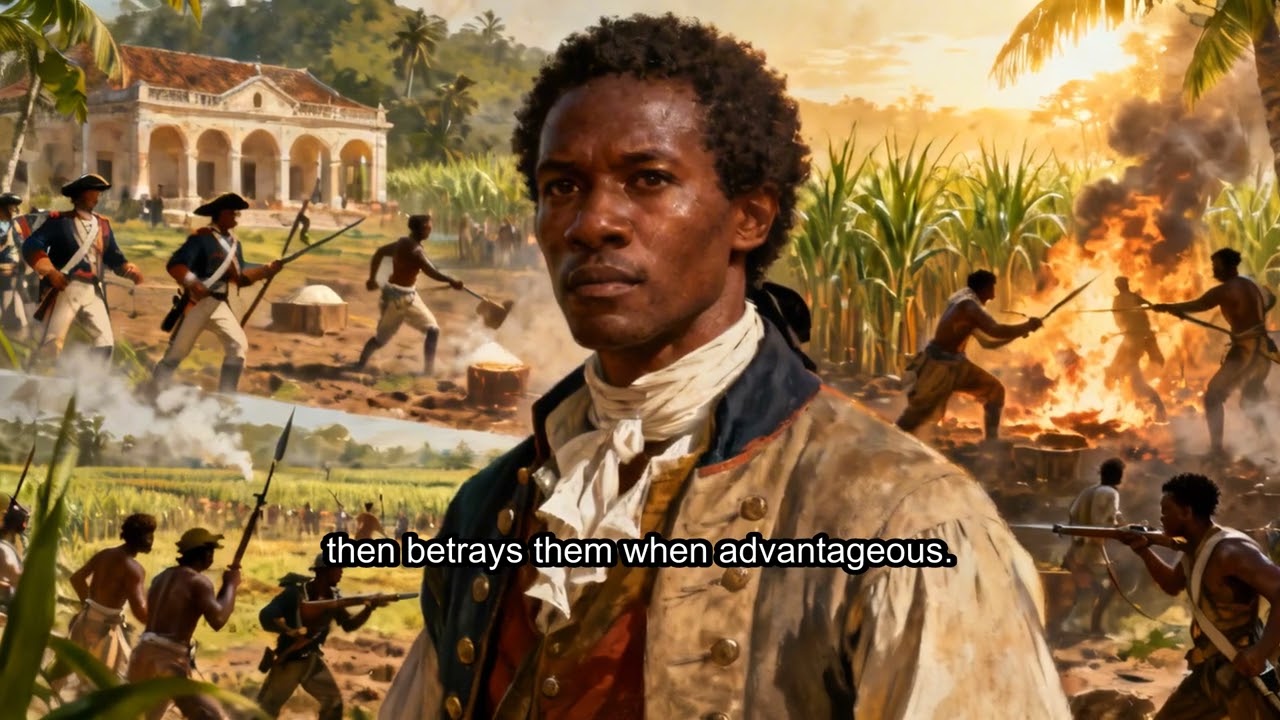
Within a week of the ceremony, on the night of August 21, signal fires lit the northern plain. Enslaved people rose simultaneously across dozens of plantations, a level of coordination that stunned colonial authorities. By the week's end, 1,800 plantations had been destroyed. What followed was not chaos but campaign: leaders like Boukman, Georges Biassou, and later Jean-François used guerrilla tactics recognizable to anyone familiar with Kongo or Akan warfare—ambush, retreat into mountainous terrain, and the strategic capture of weapons and recruits. French troops arriving to crush a supposed riot instead met a revolutionary army with real command structure, drawing on military knowledge its soldiers had carried across the Middle Passage and never forgotten.
Diaspora Connections
The Haitian Revolution stands as the clearest evidence that African oral and spiritual traditions survived the Middle Passage intact enough to organize a hemisphere-shaking event. Bois Caïman is remembered in Haiti today not as a relic but as a living touchstone—invoked in Vodou practice, in national commemorations, and in the way Haitians describe their nation's founding as a spiritual as well as political act.
This same current runs through the wider African diaspora: Akan-descended communities across the Caribbean and the Americas retained naming traditions and drum languages; Kongo cosmology shaped burial and healing practices from Cuba to the Gullah Geechee corridor; Dahomean vodun became the root of Vodou in Haiti, Vodú in the Dominican Republic, and related traditions in Cuba and Brazil. Haiti's revolution is a singular historical event, but it is also a case study in how enslaved Africans, scattered by force across an ocean, kept enough of their ancestral knowledge to reassemble it into something new—and devastating to the system meant to erase them.