Cultural Context
Among the Kikuyu, land is not simply property — it is the foundation of family, ancestry, and belonging. When Britain seized the fertile White Highlands in the early 1900s, it did not just take acreage; it severed a people from the ground their ancestors farmed and buried their dead in. By 1952, one and a half million Kikuyu were confined to roughly 2,000 square miles of exhausted land while 3,000 white settlers held 12,000 square miles between them. Understanding the uprising that followed means understanding this rupture first.
The oathing ceremonies that bound Mau Mau fighters together were not, as British officials insisted, "primitive savagery." They drew on Kikuyu tradition of sacred, binding oaths to organize what was effectively a clandestine military recruitment network — one that spread from Mount Kenya to Nairobi's slums largely invisible to colonial intelligence. This is oral tradition and living custom repurposed for liberation, not relic.
Historical Background
Britain declared Kenya a colony in 1895 and quickly moved to control its most productive farmland. Kikuyu families were reduced to farming under two acres each while individual settlers controlled thousands. Kikuyu men and women were required to carry identity passes, barred from growing profitable cash crops, and denied the vote or land ownership in the very highlands their families once worked freely. Kikuyu World War II veterans came home from fighting for Britain's freedom to find none waiting for them in their own country — a contradiction that helped ignite the movement.
By 1950, secret oathing ceremonies in the forests of Mount Kenya bound hundreds of thousands of Kikuyu to the cause. On October 20, 1952, Britain declared a state of emergency and arrested 180 Kikuyu leaders overnight, including Jomo Kenyatta, later imprisoned on charges he likely had no direct hand in. Rather than smothering the movement, the crackdown ignited it into open uprising.
The Story Behind It
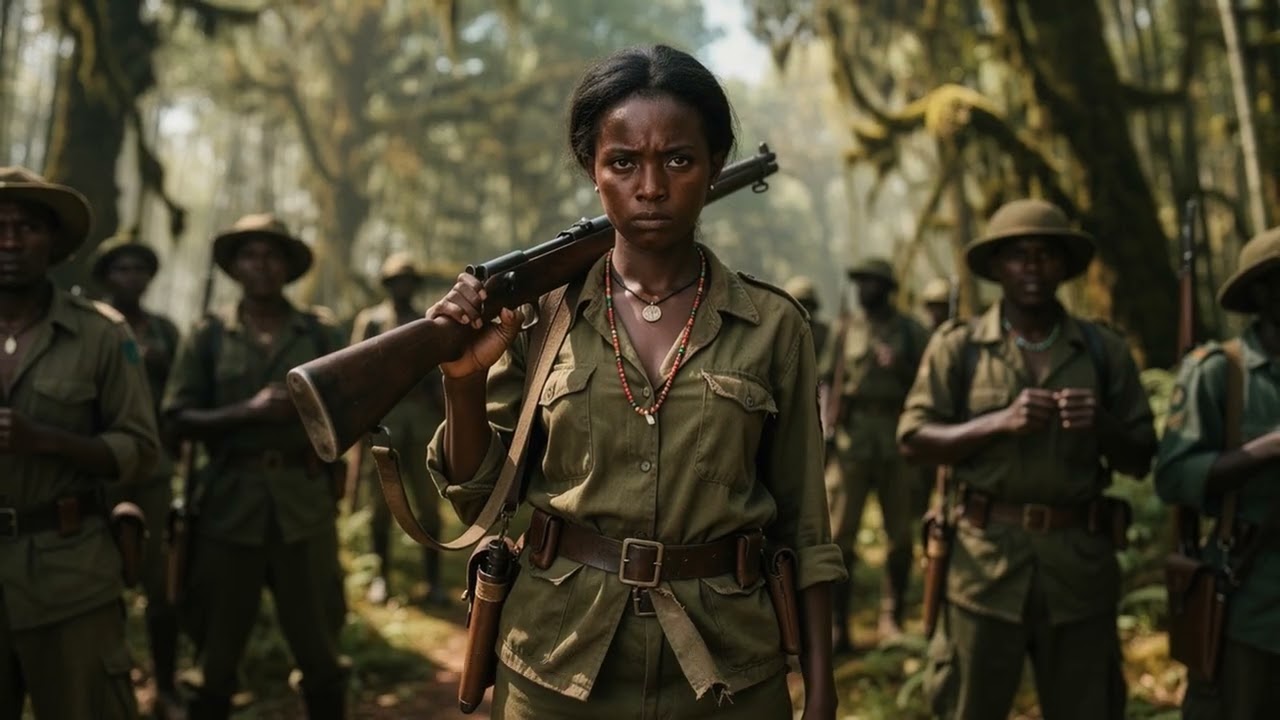
Thousands of fighters retreated into the forests of Mount Kenya and the Aberdare Ranges, terrain the British never mastered. Field Marshal Dedan Kimathi commanded roughly 20,000 forest fighters, supported by over 100,000 civilians who risked their lives supplying food and information. His guerrillas struck police posts, settler farms, and loyalist chiefs, then vanished into bamboo shelters hidden beneath the canopy. Britain answered with 10,000 soldiers, 21,000 conscripted Kikuyu loyalists, aircraft, and artillery — and still could not break them.
Kikuyu women were central to this resistance, not peripheral to it. Field Marshal Muthoni Kirima joined at 21 and became one of only three women to hold that rank, recruiting fighters and leading ambushes and sabotage from within her own walls. Countless other women served as spies, messengers, and supply runners, smuggling weapons and intelligence past British checkpoints. Their contributions were left out of official accounts for decades.
Unable to defeat the guerrillas in the forest, Britain turned on the civilian population, detaining over 90,000 Kenyans at the peak in camps where torture — beatings, castration, sexual assault, electric shocks, forced labor — was not rogue cruelty but official policy designed to force prisoners to renounce their oath. It took until 2013 for the British government to formally acknowledge this torture and pay compensation to surviving victims, ending decades of official denial and destroyed records.


