Cultural Context
In the Meroitic kingdom of Kush, along the Nile in what is now northern Sudan, the title Kandake did not mean a decorative consort. It named a queen mother or queen regnant who could hold real political and military authority in her own right, sometimes ruling alongside a king, sometimes ruling as sole sovereign. Kush had its own written script, its own temple traditions, and its own architectural language — the steep, sharply angled pyramids at Meroe are Nubian design choices, not imitations of Egypt to the north.
Understanding Amanirenas means resisting the instinct to read her through Rome's eyes alone. Classical writers, Strabo among them, described her as missing an eye. That detail comes from the enemy's own record, and it should be kept as historical description, not turned into spectacle. She was a working sovereign of a river power that had outlasted and outmaneuvered larger neighbors before, and Kush's political center at Meroe, with its own kings and Kandakes, was never a blank space waiting for someone else's paperwork.
Historical Background
Rome absorbed Egypt in 30 BCE, after Cleopatra's death and Octavian's rise to become Augustus. That put a new, aggressively expanding empire directly on Kush's northern border, and it arrived with the usual imperial habits: garrison forts, tribute demands, and the assumption that the next stretch of riverbank was simply awaiting Roman administration.
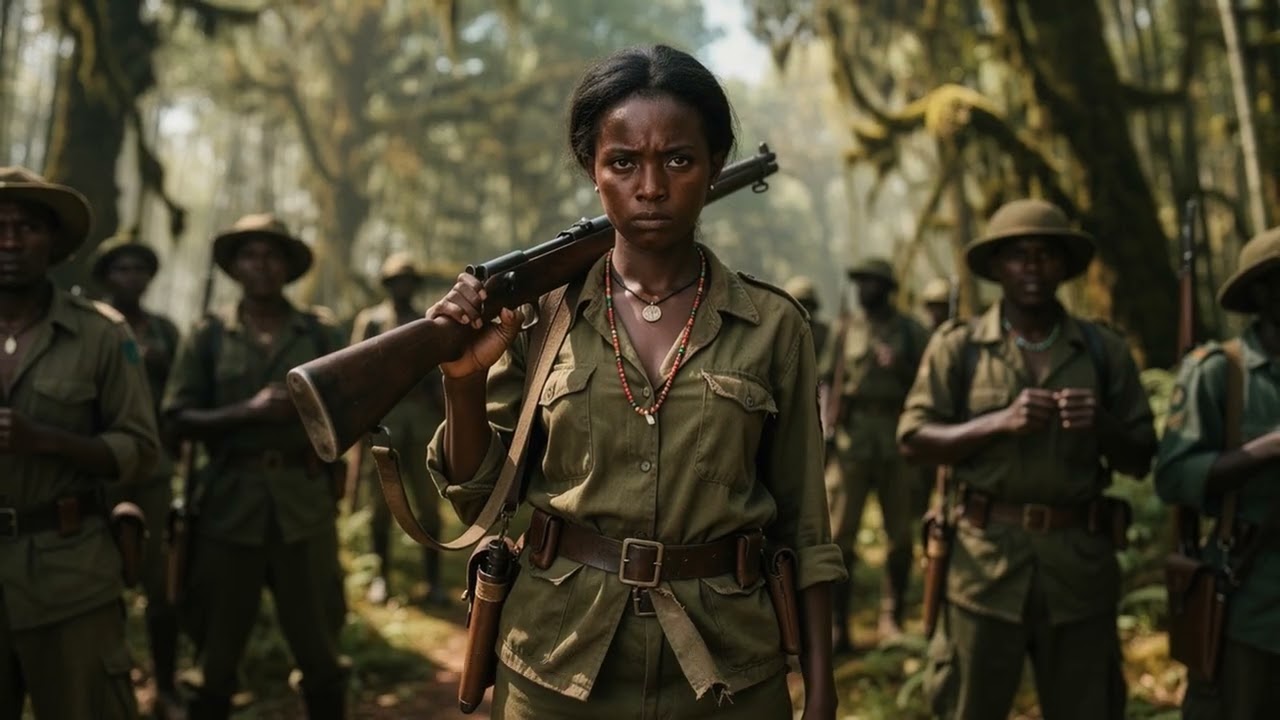
Kush answered with force rather than accommodation. Around the mid-20s BCE, Amanirenas led Kushite forces against Roman-held positions around Aswan (Syene in the Greek sources), destroying imperial monuments, taking captives, and carrying off a bronze head of Augustus himself — an object that still survives today. Rome's general Petronius pushed south in response and burned Napata, a northern Kushite capital, and Roman writers recorded it as a decisive victory. But Kush was never one city. Meroe, the kingdom's sacred and political heart, held, and Kushite military pressure continued even after Napata's destruction.
The Story Behind It
The war did not end with a Roman parade of submission. Around 21–20 BCE, negotiators met in the diplomatic orbit of Augustus, in a settlement associated with the island of Samos. The terms were not what an empire usually writes for itself: Rome returned occupied Kushite territory and dropped its tribute demand. An African kingdom had pushed the dominant Mediterranean power of the age into renegotiating a border and abandoning a tax, not through surrender but through sustained military pressure and the political nerve to keep fighting after a capital burned.
The bronze head of Augustus tells the rest of the story without needing a single word of Latin. Archaeologists found it at Meroe deliberately buried beneath a doorway threshold — positioned so that everyone entering would walk over the emperor's face. This reading, that it was a calculated insult, is widely accepted among scholars and difficult to soften: a threshold is choreography, not decoration. Every footstep became a small, repeated act of political theater, a reminder that Kush had taken Rome's face and put it underfoot.
Scholars continue to debate finer points — precise regnal years, and whether Amanirenas is sometimes conflated in older writing with a later Kandake, Amanishakheto, who is now generally treated as a distinct ruler in modern scholarship. These open questions don't unsettle the core sequence: Kush fought Rome to a standstill, kept its sovereignty, and left behind both a treaty and a buried bronze head as two forms of the same message.